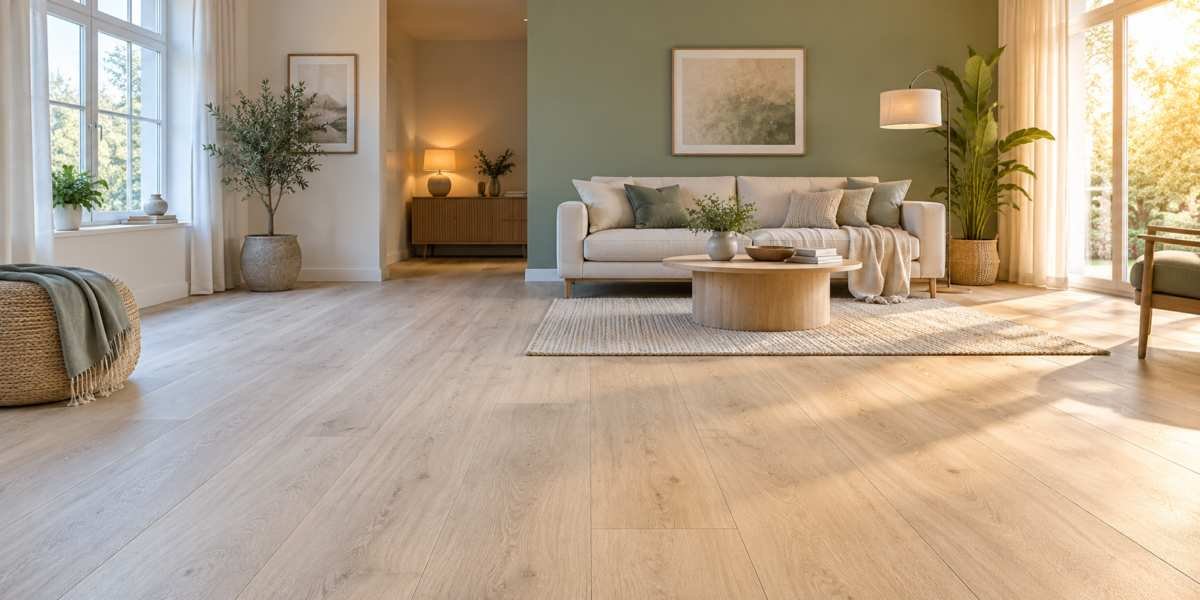
Flooring occupies a huge visual area, which means light does not merely reveal its colour; light actively rewrites it. A grey oak laminate may appear fresh and contemporary in one room, then slightly blue in another. A warm vinyl plank can look richly honeyed in afternoon sunshine and oddly orange beneath the wrong ceiling bulb. Choosing a floor without considering the room around it is rather like buying a coat after seeing it only under a changing-room spotlight.
Daylight Has a Direction
Not every window produces the same kind of daylight. In the UK, north-facing rooms generally receive cooler, softer light for much of the day. This can make grey, white and pale wood-effect flooring appear crisper, but it may also emphasise blue or green undertones that were not obvious on a small sample. A floor described as “greige” can abruptly decide that it is much more grey than beige.South-facing rooms receive stronger and warmer daylight, especially when sunlight travels directly across the floor. Here, cream, oak and golden tones can become more pronounced. That may be exactly the welcoming effect wanted in a living room, but it can make an already warm floor feel heavy when paired with beige walls, tan furniture and a determinedly enthusiastic mustard cushion.
East-facing rooms tend to look brightest and warmest in the morning, while west-facing rooms gather their strongest light later in the day. If a room is mainly used in the evening, judging flooring only during a sunny morning visit may lead to a mild identity crisis once the lamps come on.
Artificial Light Changes the Rules Again
Artificial lighting is often where apparently sensible flooring choices become surprising. Warm-white bulbs generally bring out yellow, red and brown notes, making timber finishes feel softer and more traditional. Cool-white lighting can sharpen grey and pale flooring, but may leave warm woods looking flatter or less inviting.The colour temperature is only part of the story. A single pendant light creates pools of brightness and shadow, while downlights can make texture, joins and surface variation more visible. Light positioned close to a floor may reveal every grain detail; this is helpful if that detail is attractive, less helpful if the surface suddenly resembles an archaeological dig after a week of muddy shoes.
Before committing, place a sample flat on the floor rather than holding it upright. View it in daylight, then again after dark with the usual room lighting switched on. A sample held against a wall receives light differently from a finished floor, and it can promise things it has no intention of delivering.
Walls, Furnishings and Scale All Take Part
Wall colour has an enormous influence on how flooring reads. Cool white walls can make a natural oak floor appear warmer by contrast, while cream or terracotta walls may make the same floor seem more subdued. Deep blue, forest green and charcoal walls can give pale flooring a striking edge, but they can also make a small room feel more enclosed if there is little natural light.It is worth considering the room’s permanent residents as well: kitchen units, sofas, curtains, rugs and large pieces of furniture. A floor does not need to match everything precisely; that route can lead to a room that resembles a paint chart having a very quiet argument. It should, however, sit comfortably with the dominant tones already present.
Room size changes perception too. Pale flooring often helps a compact space feel more open because it reflects more available light. This does not mean every small room must become a blank pale box. A darker floor can provide depth and character, particularly when walls and ceilings remain light. The key is to acknowledge the trade-off: rich dark flooring absorbs light, and dust, pet hair and small crumbs may become unexpectedly committed to public visibility.
Use Samples as Evidence, Not Decoration
A tiny sample is useful, but it is not a reliable preview of an entire room. Flooring has pattern variation, knots, grains, bevels and repeats that become much more apparent over several square metres. Ask for the largest sample available, or place several pieces together if possible. This gives a better impression of the overall colour and prevents one attractive plank from making promises on behalf of its entire extended family.Move samples around the room during different parts of the day. Place one beside the window, one in the centre, and one in the darkest corner. View them against the skirting boards and beneath the furniture that will remain after the work is complete. Take photographs if useful, but remember that phone cameras have their own confident ideas about white balance.
For a major purchase, it can also be sensible to test a sample near adjoining rooms. A floor that looks excellent in a bright kitchen may seem too cool when it meets a shadowy hallway. Considering these transitions early can make the finished home feel considered rather than assembled one doorway at a time.
A Brighter Way to Choose
The best flooring choice is not necessarily the shade that looked most impressive beneath showroom lights. It is the one that still feels right at breakfast, on a grey afternoon and under the lamps during an ordinary Tuesday evening. Give samples time in the actual room, let the light change around them, and judge them alongside the colours that already live there. A floor should earn its place in real life, where the lighting is less dramatic but the opinions are considerably more important.Article kindly provided by flooringcashandcarry.co.uk