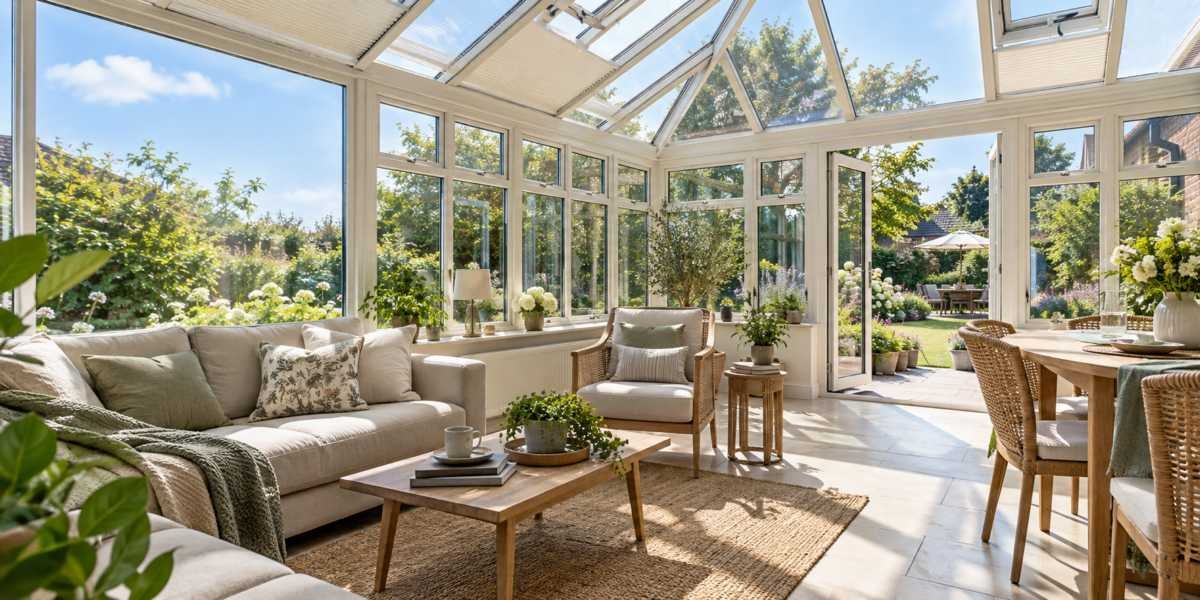
Summer Heat Needs a Route Out
When sunlight pours through broad areas of glazing, heat can build quickly. Opening one small window may help a little, but it is often like trying to cool a roast dinner by asking it politely. Effective ventilation relies on creating a route for warm air to escape while cooler air enters elsewhere. Roof vents, opening windows at different heights and doors that can be safely left ajar all help to establish movement through the room. External shading is especially useful because it stops a proportion of solar heat before it reaches the glass. Awnings, roof blinds, pergolas and carefully positioned planting can soften harsh afternoon light without turning the conservatory into a cave. Internal blinds still have value for glare and privacy, but by the time sunlight has passed through the glazing, it has already arrived at the party.Winter Comfort Starts With the Roof
The roof is often the main reason a conservatory feels difficult to use in colder months. Warm air rises, finds a large expanse of poorly insulated material and disappears with the enthusiasm of a teenager offered washing-up duty. Older polycarbonate roofs in particular can make a room feel cold, noisy and prone to dramatic changes in temperature. A modern insulated or solid roof can make a substantial difference, although it should be considered as part of the whole structure rather than a magic trick. Good glazing, properly fitted frames, sealed joints and sensible heating all matter too. If the room is freezing despite the heating being on, look for draughts around doors, vents and frames before assuming the boiler has developed a personal grudge.Choose Heating That Matches How You Use the Room
A conservatory used every day needs a dependable heat source, not a desperate burst of warmth shortly before visitors arrive. Underfloor heating can provide gentle, even comfort without taking up wall space. Electric radiators may suit rooms used occasionally, while carefully positioned conventional heating can work well where the extension is properly insulated. Avoid placing a sofa directly in front of the main heat source simply because it seems convenient. That arrangement may keep the sofa beautifully warm while everyone sitting on it develops one toasted knee and one arctic shoulder. Think about where people actually sit, where cold air enters and whether curtains or furniture are blocking useful heat from circulating.Arrange Furniture for Light Rather Than Against It
A glass extension has daylight in abundance, but that does not mean every chair should face directly into it. Consider the movement of the sun through the day. A table placed beneath the brightest roof section may be pleasant at breakfast and unbearable by mid-afternoon. A reading chair beside a side window might offer better light without requiring sunglasses and an expedition hat. Keep tall shelving and bulky cabinets away from the most useful glazed areas. They can interrupt the sense of openness that made the room appealing in the first place. Lower storage benches, slim sideboards and movable furniture usually make better companions. Rugs, cushions and curtains also soften the hard surfaces found in many conservatories, helping the room feel less like a showroom after closing time.Use Blinds as Climate Tools
Blinds are often chosen for colour or pattern, then left to perform their secondary job of managing temperature with little support or thanks. In fact, the right choice can improve comfort throughout the year. Reflective or thermal-backed blinds can reduce glare and heat gain, while pleated roof blinds can help retain warmth when temperatures fall. It is worth choosing controls that make daily use easy. A blind that requires balancing on a chair with one hand on a windowsill will soon become a permanent feature of the ceiling. Motorised options can be useful for high roof sections, particularly if they can be adjusted gradually as the sun moves. The aim is not to block every ray of daylight, but to make light manageable.Give the Room a Proper Job
A conservatory works best when it has a clear purpose. It might be a dining room, a quiet sitting area, a home office, a playroom or a place for plants that are genuinely meant to be there. Trying to make it serve as all of those things at once usually results in a drying rack, three abandoned hobby projects and a mysterious box labelled “cables”. Choose furniture and heating around the room’s main use. A dining space benefits from controllable shade and ventilation. A reading room needs comfortable seating away from direct glare. A home office may need insulated glazing and a layout that keeps screens out of the brightest light. Once the room has a job, improvements become easier to prioritise.A Pane in the Right Direction
A usable conservatory is not created by one expensive alteration or a frantic purchase of decorative cushions. It comes from balancing heat, light, airflow and layout so that the room responds calmly to changing weather. Address the roof, ventilation and shading first, then arrange the interior around how people genuinely live. When those practical elements are in place, a glass extension can become one of the most flexible rooms in the home. It need not swelter in July, shiver in January or spend the rest of the year impersonating a storage unit with unusually good views.Article kindly provided by amazonwindows.co.uk