Most homes devote enormous attention to kitchens, bedrooms and living areas while transitional spaces are treated like backstage corridors at a theatre production. They exist, people pass through them, and everyone quietly hopes they behave themselves. Yet hallways, staircases and landings often shape daily life more than the rooms receiving the expensive paint charts and dramatic lighting plans.
These spaces are where movement begins and moods quietly form. A cramped entrance can make a home feel smaller before anyone reaches the sitting room. A gloomy staircase can drain warmth from an otherwise inviting interior. A cluttered landing has a remarkable ability to create the feeling that life itself has misplaced its keys.
Movement Shapes Experience
Homes are not experienced as isolated boxes. They are experienced through motion.Walking from front door to kitchen, climbing stairs at the end of a long day, or crossing a landing during the night creates a sequence of impressions. Transitional spaces guide that sequence. When they feel awkward, the entire home can feel unsettled even if every individual room looks impressive on its own.
This is partly psychological and partly practical. Narrow corridors can produce frustration. Poor lighting creates uncertainty. Obstacles interrupt flow and subtly raise stress levels. By contrast, a well-planned hallway or staircase encourages calm movement and makes the surrounding rooms feel more coherent.
Many homeowners assume improving these areas requires structural work and large budgets. Often, the opposite is true.
Light Changes Everything
Hallways are frequently starved of natural light, especially in older properties where corridors sit between larger rooms like forgotten diplomatic territories.Artificial lighting becomes essential, but one ceiling bulb dangling in quiet resignation rarely solves the problem.
Layered lighting works better. Wall lights can soften long corridors. Stair lighting improves safety while creating atmosphere. Warm bulbs generally make transitional areas feel more welcoming, while cooler lighting can make already narrow spaces feel oddly administrative, as though visitors may soon be asked to take a numbered ticket.
Mirrors also deserve attention, not as decoration alone but as tools. Positioned thoughtfully, they bounce light and increase the sense of openness without demanding structural alterations.
Colour matters too. Pale shades can brighten confined areas, though pure white is not always the answer. Slightly warmer neutrals often feel gentler and more lived-in.
Part two will continue with storage, staircase design and making awkward spaces work harder without turning the house into an obstacle course.
Storage Without the Drama
Transitional spaces often become accidental storage zones. Shoes gather near entrances, bags settle on stairs and mysterious piles develop their own territorial confidence. Nobody remembers authorising these arrangements, yet there they are, thriving.The good news is that awkward spaces can become highly functional without major renovation.
Built-in storage is ideal when budgets allow, but smaller changes often deliver strong results. Narrow console tables, slim cupboards and wall-mounted shelves can reclaim underused areas while preserving movement.
Certain spots are especially valuable:
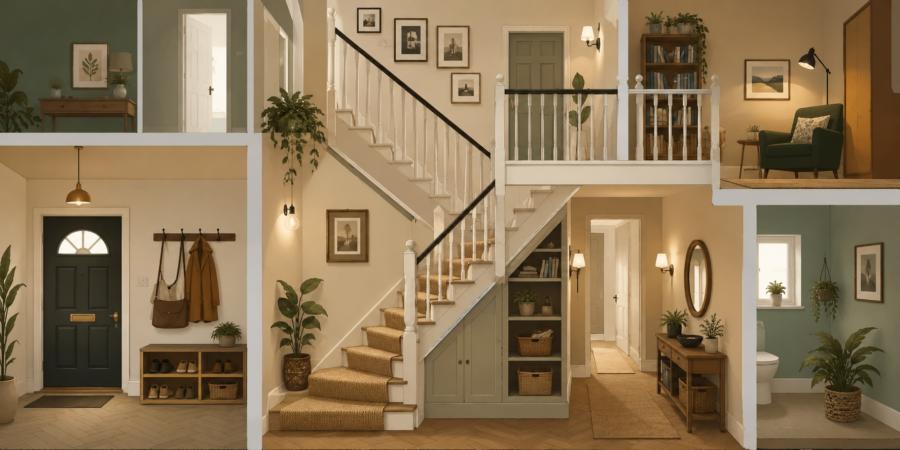
- Under-stair voids for cupboards, drawers or compact shelving
- Hallway walls for hooks and floating storage
- Landings for narrow bookcases or seating with hidden compartments
- Entry areas for dedicated shoe and coat storage
Staircases Deserve More Respect
A staircase is not merely a method of travelling vertically with varying degrees of enthusiasm.It often acts as a visual anchor connecting floors and setting the tone between spaces. Yet many staircases remain untouched for years, blending into the background despite occupying a central position.
Small upgrades can make a surprising difference. Fresh paint on balustrades or risers can sharpen the entire area. Stair runners add comfort and reduce noise, particularly in busy households where footsteps sometimes resemble wildlife migration patterns.
Safety should remain part of the conversation.
Secure handrails, adequate lighting and non-slip surfaces matter, particularly in family homes or properties with older occupants. Design and practicality are not rivals. The most successful interiors quietly combine both.
Landings deserve equal consideration. Too often they become neglected gaps between destinations. A modest chair, artwork or reading corner can turn an empty passage into somewhere with purpose.
Stepping Up to Better Spaces
Homes feel better when movement feels effortless.Hallways, staircases and landings may not command the attention of kitchens or lounge renovations, yet they influence how every room is experienced. Improving these areas rarely depends on dramatic rebuilding. More often, it comes down to light, storage, colour and thoughtful planning.
A home that flows well tends to feel calmer, larger and more welcoming. Those forgotten routes and restless corners have been shaping daily life all along. They simply waited patiently for someone to notice, which is more restraint than most hallway shoe collections manage to display.
Article kindly provided by londonelitetrades.co.uk