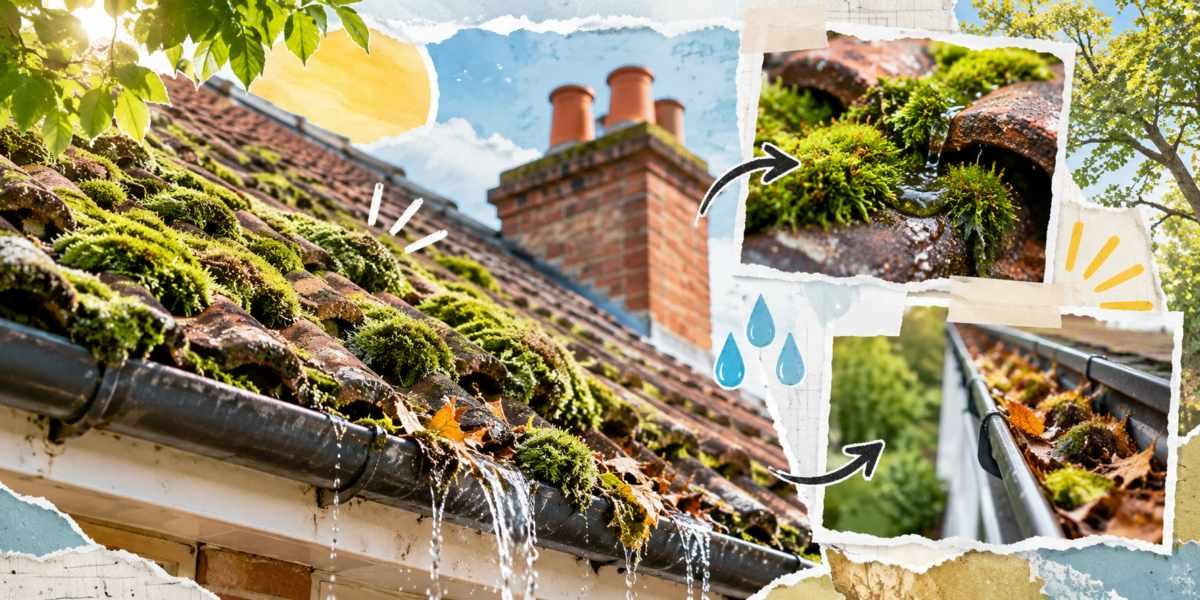
Unlike a garden lawn, moss doesn’t need soil to establish itself. It attaches to rough surfaces, absorbs moisture and gradually expands wherever conditions suit it. Unfortunately, the conditions that make moss comfortable aren’t always particularly good for roofing materials.
When Rainwater Meets a Green Obstacle
A properly functioning pitched roof relies on gravity, overlapping materials and unobstructed drainage routes. Rainwater travels down the tiles, enters the gutters and disappears through the downpipes. It’s a relatively simple arrangement, which is probably why roofs have been using it for centuries without demanding a software update.Moss complicates this process by creating small obstacles across the roof surface. Dense patches can slow water movement, particularly around tile overlaps, roof valleys and drainage channels. During prolonged rainfall, these obstructions may encourage water to collect in places where it would normally drain away.
Moss also behaves rather like a sponge. It absorbs and retains moisture, keeping sections of the roof damp long after surrounding surfaces have dried. This doesn’t automatically mean that water will penetrate the building, but persistent dampness can contribute to the deterioration of vulnerable roofing materials.
In colder climates, retained moisture presents another concern. Water trapped around cracks and tile edges can freeze, expand and potentially worsen existing weaknesses. The moss itself isn’t necessarily responsible for every damaged tile, but it can help create conditions that accelerate deterioration.
Why Some Roofs Become Moss Magnets
Two neighbouring houses can have remarkably different moss problems despite experiencing identical weather. One roof might remain almost spotless while the other resembles an abandoned cottage from a particularly enthusiastic fairy tale.Roof orientation plays an important role. In the Northern Hemisphere, north-facing slopes generally receive less direct sunlight, allowing moisture to linger. South-facing surfaces often dry more quickly, making them less hospitable to moss.
Surrounding trees introduce additional complications. Overhanging branches provide shade, while falling leaves and organic debris can accumulate between tiles and around drainage features. These materials help retain moisture and create favourable conditions for moss establishment.
Roofing materials also influence growth. Older concrete tiles with roughened surfaces may provide more opportunities for moss to attach than smoother, less porous materials. Ageing surfaces, sheltered valleys and poorly ventilated surroundings can further encourage colonisation.
Importantly, moss growth doesn’t automatically indicate a defective roof. Some perfectly serviceable roofs develop substantial green coverage simply because their location provides ideal growing conditions.
When Moss Starts Moving Into the Gutters
Moss rarely stays exactly where it started. Heavy rainfall, strong winds and natural deterioration can dislodge clumps, sending them sliding towards the gutters. Once there, they join leaves, twigs and other debris in forming an increasingly effective drainage obstruction.Blocked gutters can overflow during heavy rain, directing water down external walls instead of safely away from the property. Persistent overflow may contribute to dampness, staining and deterioration around brickwork, window frames and foundations.
Roof valleys are particularly vulnerable because they concentrate water from adjoining roof slopes. Accumulated moss can restrict these channels, increasing the possibility of water backing up beneath vulnerable tile edges.
Removing Moss Without Removing Half the Roof
Not every patch of moss requires immediate attention. Small, isolated growths on an otherwise healthy roof may present little immediate concern. However, thick deposits, obstructed drainage channels and recurring gutter blockages suggest that removal could be worthwhile.The cleaning method matters enormously. Aggressive pressure washing can damage tile surfaces, disturb protective coatings and force water beneath overlapping roofing materials. A machine powerful enough to remove years of accumulated moss might also remove things the roof was rather hoping to keep.
Professional roof cleaners often use controlled manual scraping with tools appropriate to the tile profile. Depending on the roof’s condition and material, carefully selected biocidal treatments may help control remaining growth.
Chemical treatments should always be suitable for the roofing material and applied according to relevant safety and environmental instructions. Runoff can affect nearby plants, ponds and drainage systems.
Homeowners should avoid climbing onto roofs themselves. Wet moss makes already hazardous surfaces exceptionally slippery, and fragile tiles may crack underfoot. Professional assessment is generally the safer approach.
Keeping Future Growth at Bay
Preventing moss completely may be unrealistic, particularly where buildings are surrounded by mature trees. Nevertheless, several maintenance measures can reduce the conditions that encourage excessive growth.Trimming overhanging branches where appropriate can improve sunlight exposure and airflow. Regular gutter cleaning prevents displaced moss from accumulating into substantial blockages, while periodic ground-level inspections help identify developing problems.
Maintaining roof drainage is particularly important during autumn and winter, when falling leaves and prolonged rainfall create additional challenges.
A Roof Above the Moss
A little greenery overhead isn’t necessarily a disaster, and homeowners shouldn’t feel obliged to pursue a roof so spotless that passing birds feel underdressed.The sensible approach is to distinguish harmless cosmetic growth from moss that interferes with drainage or contributes to persistent moisture retention. Understanding that difference helps prevent unnecessary cleaning while ensuring genuine problems receive attention.
Ultimately, a healthy roof doesn’t need to win a beauty contest. It simply needs to keep rainwater moving in the right direction, preferably without establishing a botanical garden along the way.
Article kindly provided by riverstoneroofing.co.uk