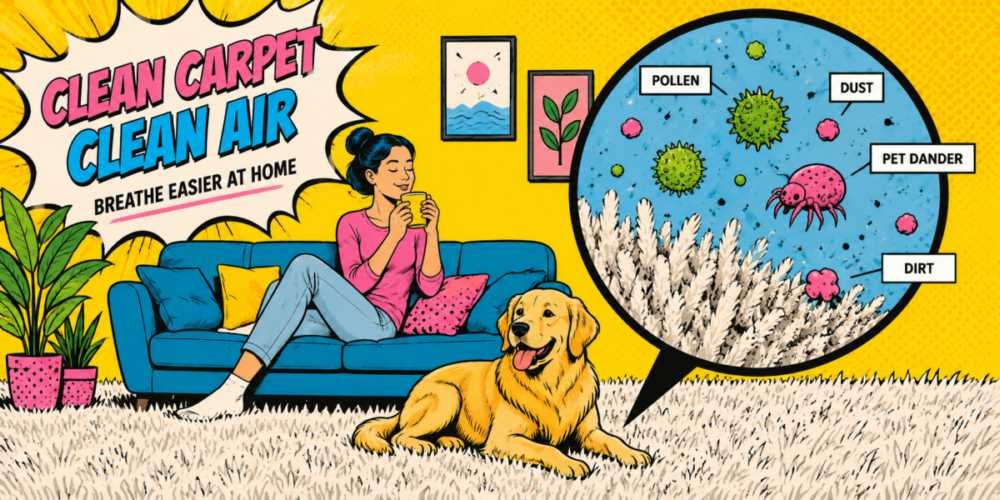
While carpet looks harmless enough, it can quietly collect microscopic particles that move through the home every day. Some arrive through open windows. Some travel in on shoes. Some are supplied generously by pets who believe shedding is a lifestyle. Over time, these particles settle deep into the fibres, where they can stay hidden long after the room appears clean.
This matters because indoor air quality is not just about what floats around visibly. Many irritants are too small to see, yet they can still affect comfort, breathing, and general freshness inside the home. For people with allergies, asthma, or sensitive noses that seem to detect dust from another postcode, carpets can play a bigger role than expected.
How Carpets Hold Onto Airborne Irritants
Carpet fibres act a little like a filter. Dust, pollen, dirt, and other particles settle into the pile instead of remaining in the air. In one sense, this can be helpful because those particles are no longer floating directly at face height. The problem begins when the carpet is disturbed.Walking, playing, vacuuming poorly, dragging furniture, or having a dog sprint through the lounge like it has just received urgent news can send some of those particles back into the air. Once airborne again, they may be breathed in or settle on nearby furniture, curtains, and bedding.
Moisture can make the situation worse. Damp carpet may encourage musty odours and create conditions that are less than ideal for a healthy indoor environment. Even without major water damage, small spills that are not dried properly can leave behind residue that attracts more dirt. That sticky patch near the sofa may not be haunted, but it is probably doing something unpleasant.
Signs Your Carpet Might Be Affecting Your Indoor Air
A carpet does not need to look filthy to influence the air around it. Warning signs can be subtle. A room may smell stale shortly after cleaning. Allergy symptoms may feel worse indoors than outdoors. Dust may seem to return quickly after wiping surfaces. You might also notice that certain rooms feel heavier or less fresh, especially after activity.None of this means the carpet is the villain of the household. It simply means it needs regular attention, much like dishes, laundry, or that mysterious drawer everyone keeps pretending is organised.
Cleaning Habits That Actually Help
The goal is not to become the sort of person who follows guests around with a vacuum cleaner. A few steady habits can make a real difference without turning carpet care into a second job.- Vacuum slowly, especially in high-traffic areas, so the machine has time to lift dust from deeper fibres.
- Use a vacuum with a good filter, particularly if anyone in the home has allergies or breathing sensitivities.
- Clean spills quickly and dry the area properly to prevent residue and musty smells.
- Place mats at entrances to reduce the amount of dirt and pollen brought inside.
- Keep pets brushed and their favourite carpet zones cleaned more often.
When Regular Vacuuming Is Not Enough
Vacuuming removes surface debris and some embedded particles, but it cannot always reach everything trapped deep in the carpet. Over time, oils, fine dust, allergens, and residue can settle below the visible surface. That is when a carpet may look acceptable but still feel stale.A deeper clean can help remove material that ordinary vacuuming leaves behind. This is especially useful after seasonal pollen peaks, renovations, long wet periods, pet accidents, or months of heavy foot traffic. It can also be helpful before deciding that a carpet is worn out, because sometimes the issue is not age. Sometimes the issue is simply that the carpet has been carrying half the outdoors like a very soft backpack.
Serious attention should be given to dampness. If carpet has been wet for an extended period, especially after leaks or flooding, it should be assessed properly. Moisture trapped underneath can create ongoing odour and air quality problems.
A Breath of Fresh Flooring
Carpet can make a home warmer, quieter, and more comfortable, but it also needs sensible care. Dust, pollen, pet dander, and tiny particles do not vanish just because they are out of sight. They settle, wait, and occasionally reappear with the dramatic timing of an unwanted sequel.The best approach is practical rather than obsessive. Vacuum well, reduce what gets tracked inside, treat spills quickly, and arrange deeper cleaning when the carpet starts to smell stale, trigger symptoms, or look dull despite regular care. Clean carpet will not solve every indoor air issue, but it can make the home feel fresher and more comfortable to breathe in.
Your lungs may not send a thank-you card, but they are probably the type to appreciate the gesture.
Article kindly provided by nicksprofessionalcarpetcleaning.com.au