How to Check Your Roof for Storm Damage in Winchester
Although Winchester is relatively sheltered compared to many parts of the UK, it still experiences its fair share of strong winds, particularly during the autumn and winter months. The town’s mix of older Victorian and Edwardian properties, especially in areas such as St Cross, Stanmore and parts of the city centre, means storm-related roof damage is something many homeowners eventually have to deal with.After a period of high winds, it’s worth carrying out a few simple checks to make sure your roof hasn’t been affected.
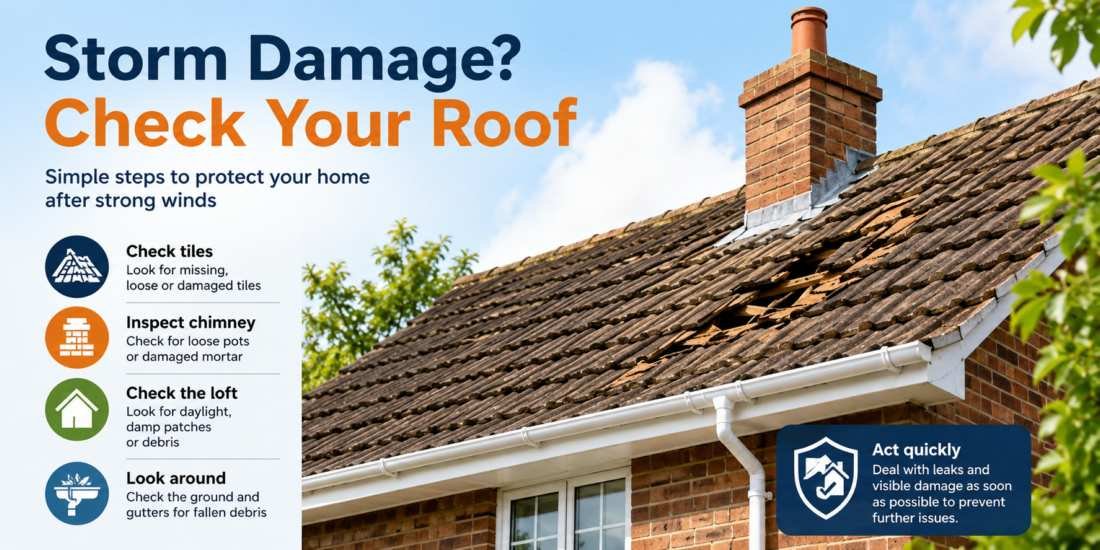
What to Look For After Strong Winds
The safest place to inspect a roof is from ground level. You don’t need to climb onto the roof to spot many of the common signs of storm damage, and it’s best not to walk on a roof that may already have been compromised.Check the Ridge and Hip Tiles
Ridge and hip tiles are often the first parts of a roof to suffer during strong winds as they’re fully exposed to the elements.Look along the roofline for any tiles that appear cracked, loose, missing or out of place. A pair of binoculars can be useful if you’re struggling to see details from the ground.
Look for Missing or Damaged Tiles
Scan the roof covering for any obvious gaps where tiles or slates may have been dislodged.Missing tiles are usually quite easy to spot from the ground. Cracked tiles can be more difficult to identify, but larger cracks or broken sections may be visible in good daylight conditions.
Inspect the Chimney
Strong winds can sometimes loosen chimney pots or damage the mortar holding them in place.If a chimney pot looks crooked, has shifted position, or appears different to how it normally looks, it’s worth having it checked professionally.
Check the Loft Space
One of the simplest ways to identify roof damage is to inspect your loft.Look for signs of:
- Daylight coming through the roof
- Water staining or damp patches
- Debris that may have blown in during the storm
Look Around the Property
Take a walk around the outside of your home and check the ground below the roofline.Broken pieces of tile, slate or ridge mortar can often indicate damage higher up. It’s also worth checking gutters for fallen debris, as this can provide clues about what has happened during the storm.
What Needs Immediate Attention?
Not all storm damage requires emergency repairs, but any opening that allows water into the property should be dealt with as soon as possible.Issues that should be addressed promptly include:
- Missing tiles or slates on the main roof
- Visible holes or gaps in the roof covering
- Dislodged or collapsed chimney pots
- Lead flashing that has lifted away from the wall
- Any sign of water entering the property
What Can Usually Wait?
Some forms of storm damage are less urgent and can often wait for a scheduled inspection.Examples include:
- Ridge tiles that have shifted slightly but remain secure
- Minor cracks visible from ground level
- Small areas of mortar loss that aren’t causing leaks
Before Calling a Roofer
If you believe your roof has been damaged during a storm, it can be helpful to take photographs from the ground and make a note of what you’ve found.Following periods of severe weather, roofing companies are often dealing with a high volume of enquiries, so having clear information can speed up the inspection process.
If you intend to make an insurance claim, contact your insurer before authorising any repair work. Many providers have their own assessment procedures and may wish to inspect the damage first.
When a roofer visits, they’ll check not only the visible damage but also any underlying issues that may not be obvious from the ground.
Roof Repairs Winchester regularly attends storm damage call-outs throughout Winchester and the surrounding areas.
Storm damage inspections can sometimes uncover more widespread deterioration. If your roof is approaching the end of its lifespan, you may also wish to consider the cost of a new roof in Winchester as part of your longer-term plans.
Think your roof may have suffered storm damage? Get in touch with our team today.
Frequently Asked Questions
How can I check my roof for storm damage without climbing onto it?Most signs of storm damage can be spotted safely from ground level. Look for missing tiles, damaged ridge tiles, loose chimney pots, debris on the ground and any obvious gaps in the roof. Checking your loft for daylight, damp patches or debris can also help identify problems.
Is storm damage covered by home insurance?
In many cases, yes. Most standard home insurance policies include cover for storm damage. It’s always worth checking your policy documents and contacting your insurer before arranging repairs, as they may require their own inspection.
How quickly should I arrange an inspection?
If there are missing tiles, visible gaps or signs of water entering the property, you should arrange an inspection as soon as possible. Less urgent issues can usually wait a few days for a scheduled visit.
What is the most common type of storm damage in Winchester?
Dislodged ridge tiles are one of the most common issues following high winds. Older properties may also experience slipped slates, damaged flashing and movement around chimney pots.
Article kindly provided by winchesteroofrepairs.co.uk