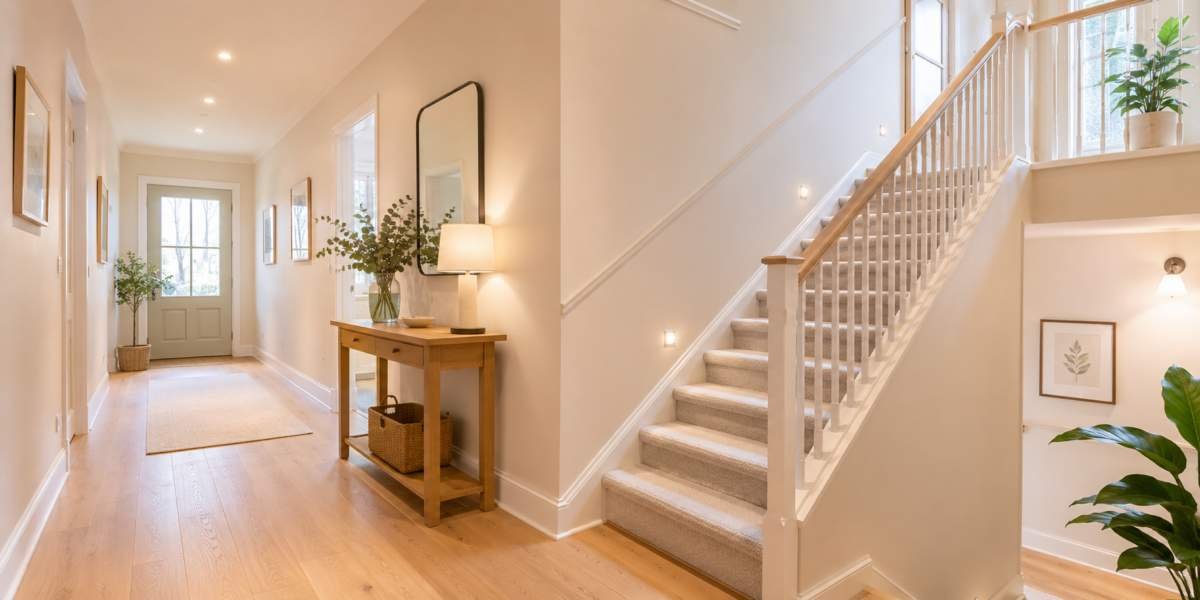
People often treat these areas as little more than routes from one destination to another. That approach is understandable, but it overlooks just how frequently they are used. Whether carrying shopping bags, balancing a laundry basket, chasing an energetic child or negotiating the stairs with a sleepy expression before the first cup of coffee, these transitional spaces work harder than almost anywhere else in the home. Giving them more attention can make everyday life noticeably easier.
Movement Shapes Perception
Unlike rooms designed for sitting or relaxing, hallways and staircases are experienced while people are in motion. That changes how the brain interprets the environment. Narrow shadows, uneven lighting and awkward visual interruptions become much more noticeable when someone is walking instead of standing still.A well-lit route naturally encourages confident movement. When corners, floor surfaces and changes in elevation are clearly visible, people instinctively feel more comfortable. The space appears calmer because the eyes are not constantly searching for missing information. Even subtle improvements in lighting can make a corridor seem wider and less confined without moving a single wall.
Visual flow also matters. When brightness remains relatively consistent from one area to the next, the home feels connected instead of fragmented. Abrupt transitions between bright rooms and dim corridors can make even beautifully decorated interiors feel slightly disjointed.
Why Shadows Matter More Than You Think
Shadows are not automatically the enemy. They add depth and character when used thoughtfully. Problems arise when they appear in places where people need clarity rather than atmosphere.A single ceiling fitting positioned in the wrong place may cast surprisingly deep shadows across stairs or along hallway walls. While it may provide enough overall brightness, the distribution of light can leave important details partially hidden. Steps may appear flatter than they really are, making depth harder to judge, particularly during evenings or early mornings.
Multiple light sources positioned strategically often reduce these harsh contrasts. Wall-mounted fittings, carefully placed ceiling lights or subtle accent lighting can spread illumination more evenly, reducing dark pockets without making the space feel clinical.
Nobody wants their staircase to resemble the opening scene of a detective drama every time they go downstairs looking for a midnight snack. Kitchens usually contain the biscuits. Staircases should avoid supplying unnecessary suspense.
Safety Goes Beyond Preventing Trips
Good lighting contributes to safety in ways that are often overlooked. Preventing slips and falls is the obvious benefit, but comfortable visibility also reduces hesitation and eye strain. When people can immediately understand their surroundings, movement becomes smoother and more natural.This becomes especially valuable in households with children, older adults or visitors unfamiliar with the layout. Even healthy adults occasionally discover that carrying an oversized delivery box while pretending they can still see the stairs underneath is a deeply optimistic strategy.
Design choices that improve safety often include:
- Keeping lighting levels consistent between connected spaces.
- Reducing glare that can temporarily affect vision.
- Ensuring every step and landing is clearly visible.
- Avoiding dark corners where depth becomes difficult to judge.
Making Smaller Spaces Feel More Generous
Many hallways are not especially large, yet they do not necessarily need structural changes to feel more spacious. Light has an enormous influence on perceived size. Even illumination across walls and ceilings reduces harsh visual boundaries, allowing the eye to travel more comfortably through the space.Lighter wall colours often reflect available light more effectively, but placement matters just as much as paint selection. Illuminating the end of a hallway naturally draws the eye forward, making the journey through the space feel shorter and more inviting. Adding gentle lighting to artwork, decorative features or architectural details can also introduce interest without creating visual clutter.
Mirrors can contribute as well, although they work best when reflecting pleasant views or additional light rather than another blank wall. A thoughtfully positioned mirror can make a modest landing appear surprisingly open. A mirror facing a pile of shoes simply creates the impression that the household owns twice as many shoes, which may not be the intended effect.
Matching Light to Daily Life
Hallways and staircases are used at every hour of the day, often under very different conditions. Bright daylight may flood the entrance during the morning, while evening requires dependable artificial lighting that feels comfortable rather than harsh.Selecting suitable colour temperatures can make a noticeable difference. Warmer light often creates a welcoming atmosphere during the evening, while more neutral lighting may provide greater clarity throughout the day. The right choice depends on the surrounding rooms and how the home is used, but consistency generally creates a smoother visual experience as people move between spaces.
Modern lighting controls can also provide flexibility. Motion sensors, dimmers and timers help ensure frequently travelled routes remain practical without wasting energy. Nobody enjoys fumbling for a switch while carrying shopping bags, balancing house keys and wondering why the receipt is somehow attached to their sleeve.
Small Details Create Lasting Impressions
Visitors usually experience a home’s circulation spaces before almost anything else. Although these areas may not receive compliments as often as a newly renovated kitchen, they quietly establish expectations. A bright, comfortable hallway creates an immediate sense of care and organisation before anyone reaches the main living areas.Attention to finishes also contributes to the overall experience. Clean lines, coordinated fixtures and carefully chosen decorative elements help transitional spaces feel intentional rather than forgotten. Even something as simple as reducing visual clutter allows lighting to perform more effectively, preventing the area from feeling cramped or chaotic.
Because these routes are used countless times every week, improvements deliver ongoing value. Unlike decorative features that might only be noticed occasionally, better lighting and thoughtful design contribute to nearly every journey through the home.
Bright Ideas That Step Up
Hallways, landings and staircases may never become the headline attraction of a home, but they quietly influence comfort, confidence and everyday convenience more than many people realise. Paying attention to visual flow, reducing unnecessary shadows and creating balanced illumination transforms these hardworking spaces from overlooked passageways into welcoming connections between rooms.When transitional areas receive the same thoughtful planning as the destinations they connect, the entire home benefits. Walking from one room to another becomes smoother, safer and more pleasant, proving that sometimes the places designed simply to get us somewhere deserve just as much consideration as the places where we eventually stop.
Article kindly provided by cplights.com