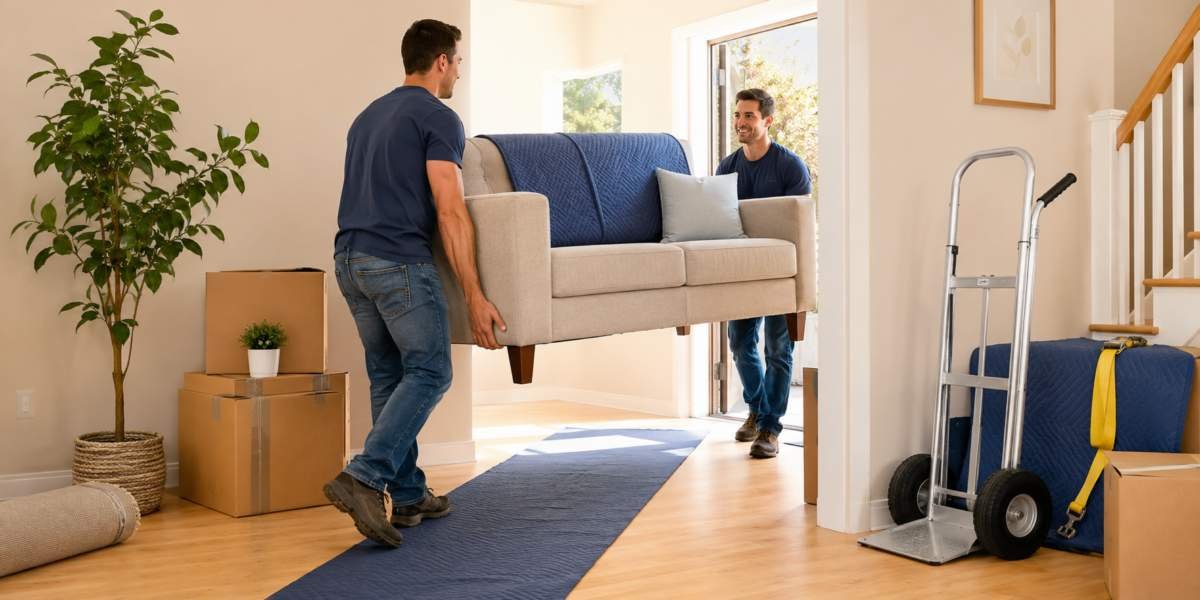
Measure Before the Furniture Starts Moving
The first job should happen before anyone lifts a single corner. Measure the furniture, then measure the doorways, stairwells, corridors, lifts, gates, and tight turns it needs to pass through. It sounds obvious, yet many moving-day problems begin with the sentence, “It looked smaller in the room.” Take note of the height, width, and depth of large items such as sofas, wardrobes, dining tables, refrigerators, bookcases, and bed frames. Then compare those measurements with the available access points. Do not forget to account for door handles, handrails, low ceilings, narrow landings, and decorative features that may reduce the usable space. Sometimes the answer is simple. A table may need its legs removed. A bed frame may need to be dismantled. A large sofa may need to be carried upright rather than flat. Planning these details early can save considerable time and avoid turning the hallway into an obstacle course designed by someone with a grudge against furniture.Clear the Route Before Carrying Anything
Heavy furniture becomes much harder to move when the path is cluttered with boxes, shoes, rugs, cables, pet bowls, and the mysterious pile of items that somehow appears near every front door. Before beginning, clear a route from the furniture’s starting point to the vehicle or final room. Move smaller objects first and create enough space for people to walk safely while carrying large items. Keep children and pets away from the moving area, not because they are guaranteed to cause chaos, but because they have an almost supernatural ability to appear exactly where a heavy cabinet is about to be placed. It is also wise to identify places where movers can pause safely. Large furniture may need to be set down temporarily while corners are negotiated or doors are opened. Planning these rest points prevents rushed movements and reduces the chance of an item being dropped or dragged.Protect Floors, Walls, and Furniture Edges
A careful move protects more than the furniture itself. Timber floors, tiles, carpets, painted walls, door frames, and stair rails can all suffer damage if heavy items are dragged, bumped, or swung around without enough control. Furniture blankets, moving pads, cardboard corner protectors, and stretch wrap can make a major difference. Blankets help prevent scratches and dents on tables, cabinets, and appliances. Corner protection is especially useful for sharp-edged items that seem determined to find the nearest freshly painted wall. Floor protection should also be considered. Rugs can be rolled up and removed, while hard floors may benefit from runners, sheets of cardboard, or protective mats. Avoid dragging furniture directly across surfaces, even when it appears quicker. That “quick slide” can leave a long scratch that will remain as a permanent souvenir of moving day.Use Equipment Rather Than Heroics
Trolleys, dollies, lifting straps, furniture sliders, and hand trucks exist for a reason. They reduce physical strain and give people better control over awkward loads. Using the right equipment is not an admission of weakness; it is proof that someone has learned from the ancient history of sore backs and broken coffee tables. Heavy appliances, filing cabinets, large cupboards, and bulky gym equipment should not be moved through brute force alone. A trolley can distribute weight more evenly, while straps can help secure an item and prevent it from shifting unexpectedly.- Use furniture sliders for heavy items moving across suitable floor surfaces.
- Use a trolley or dolly for appliances and large boxes.
- Use straps to keep awkward items stable during lifting and transport.
- Remove drawers, shelves, and loose components where possible.
Lift Smart Instead of Simply Lifting Hard
Good lifting technique protects your body just as much as it protects the furniture. Back injuries are among the most common moving-day problems, and many occur because someone attempts to lift too much weight while twisting or reaching awkwardly. Whenever possible, stand close to the object before lifting. Bend at the knees rather than the waist, keep your back as straight as practical, and hold the item close to your body. This allows your legs to do most of the work instead of placing unnecessary strain on your lower back. If two or more people are carrying the same piece of furniture, communication becomes essential. Agree on simple commands before lifting so everyone moves together. A well-timed “stop,” “lower,” or “pivot” is far more useful than discovering halfway down a staircase that each person has a different plan. Equally important is knowing when not to lift. If an item feels too heavy, too unstable, or too awkward, pause and rethink the approach. Removing doors, disassembling furniture, or using additional equipment often makes far more sense than testing the limits of your spine.Think Several Steps Ahead
Experienced movers often appear calm because they are constantly thinking ahead. Rather than focusing only on the next doorway, they are already considering the corner after that, the staircase beyond it, and where the furniture will be placed once it arrives. This forward planning reduces unnecessary lifting. Instead of carrying a heavy cabinet into the wrong room and discovering it needs to be turned around later, it is positioned correctly the first time. That saves both energy and patience. Weather deserves attention as well. Rain can create slippery paths outdoors, while strong winds may make carrying large, flat items surprisingly difficult. Even something as simple as checking where the moving vehicle will park can eliminate unnecessary carrying distance. Taking short breaks also helps maintain concentration. Fatigue increases the likelihood of poor lifting technique and rushed decisions. Five minutes of rest is usually much cheaper than repairing a damaged wall or nursing a strained shoulder.Making Every Move Count
Heavy furniture has earned its reputation for being awkward, but it is rarely unbeatable. Most moving challenges become much easier when approached with preparation instead of panic. Careful measurements, a clear pathway, proper protection, sensible lifting techniques, and the right equipment all work together to reduce risk and make the entire process more efficient. There will probably still be one chair that refuses to cooperate and one cupboard that somehow gains extra weight overnight. Fortunately, those moments become minor inconveniences rather than major disasters when the move has been planned properly. A thoughtful approach protects your home, your belongings, and perhaps most importantly, ensures your back is still willing to negotiate with you the following morning.Article kindly provided by tommystransport.com.au