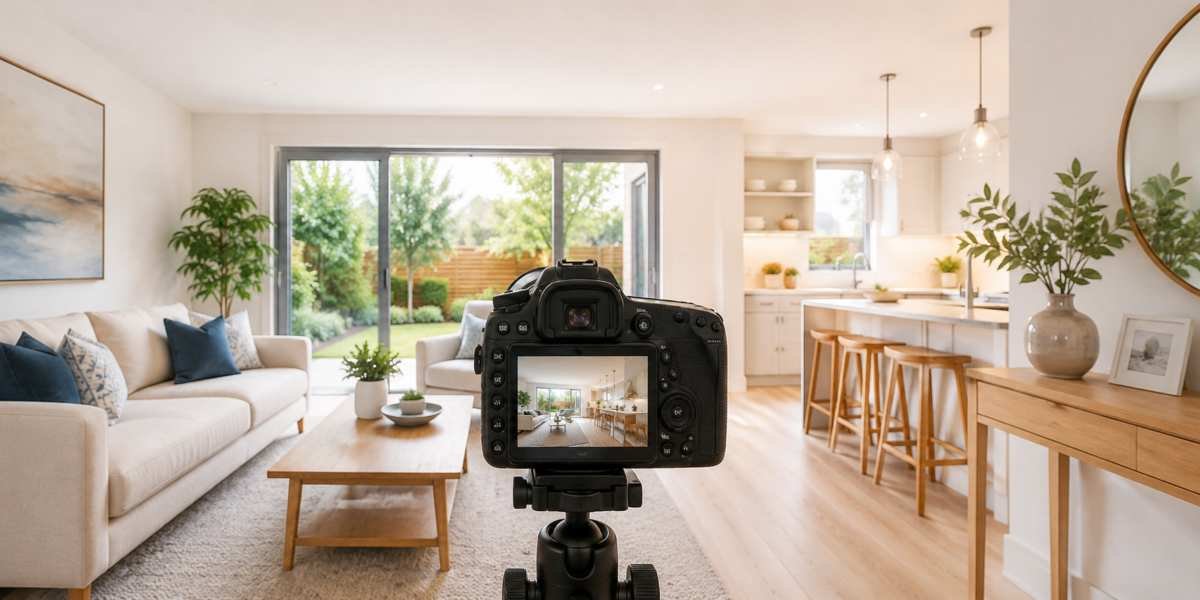
Distortion usually appears when the camera is positioned too high, too low or at an angle. Wide-angle lenses can make the problem worse, especially when photographers attempt to squeeze an entire room into one dramatic frame. A spacious appearance is useful, but viewers should not arrive expecting a ballroom and discover somewhere better suited to storing a broom.
Keep the Camera Level
One of the most effective ways to prevent distorted rooms is to keep the camera parallel with the floor. Tilting it upward causes vertical lines to converge near the ceiling, while tilting downward can make furniture and walls appear to slide toward the centre of the image.A tripod with a built-in spirit level makes careful positioning much easier. Set the camera at approximately waist or chest height, depending on the room and the furniture. Kitchens may benefit from a slightly higher viewpoint so worktops remain visible, while bedrooms often look more natural when photographed from a lower position. The correct height is the one that shows the room comfortably without making the ceiling or floor dominate the photograph.
Use Wide Lenses With Restraint
A wide-angle lens is helpful in smaller homes, but extremely wide settings can stretch objects near the edges of the frame. Chairs become unusually broad, kitchen islands grow into aircraft carriers and lamps begin leaning toward freedom.Whenever possible, step backwards rather than immediately selecting the widest focal length available. Photographing from a doorway, hallway or adjoining room can provide extra distance while preserving more natural proportions. Keeping important furniture away from the extreme edges of the frame will also reduce visible stretching.
For many residential interiors, a moderately wide lens provides enough coverage without creating an exaggerated sense of scale. Estate agents and homeowners should remember that accuracy builds trust. A realistic image may attract fewer startled clicks, but it is far more likely to create sensible expectations.
Choose a Thoughtful Position
Camera placement determines how viewers understand the layout. Photographing directly from a corner can reveal depth, although standing too close to the wall may make foreground objects appear oversized. Moving slightly inward often creates a more balanced composition and allows the eye to travel naturally through the room.Look for strong lines created by flooring, worktops, windows and furniture. These should guide attention into the space rather than pull it awkwardly sideways. Before taking the photograph, check whether doors, chairs or decorative objects are blocking important features. A small adjustment can often improve the image more than another twenty minutes spent wrestling with camera settings.
Let Natural Light Do Most of the Work
Natural light usually produces the most welcoming property photographs. Open curtains and blinds fully, then allow daylight to spread evenly through the room. Early morning and late afternoon often provide softer illumination, while harsh midday sunshine can create strong shadows and bright patches that distract from the space itself.Interior lights can be useful, particularly in darker corners, but mixing several different colour temperatures sometimes gives walls an unusual appearance. A lounge should not resemble half a cosy retreat and half a science laboratory. If possible, keep the lighting consistent and adjust the white balance accordingly during editing rather than trying to solve everything with additional lamps.
Present Every Room Honestly
Each area of a home deserves an approach that suits its purpose. Living rooms benefit from balanced compositions that show seating areas, windows and circulation space. Kitchens often look strongest when worktops remain uncluttered, allowing cabinetry and finishes to become the focus. Bedrooms should feel calm, with neatly arranged bedding and only a handful of carefully chosen decorative items.Bathrooms can be surprisingly difficult because mirrors reflect both light and photographers with remarkable enthusiasm. A slight adjustment in camera position usually solves the problem without requiring an acrobatic performance worthy of a gymnastics competition.
Outdoor spaces deserve equal attention. Gardens, patios and balconies should be photographed when the light is gentle and the area is tidy. Freshly cut grass, swept paving and neatly arranged outdoor furniture help viewers imagine themselves enjoying the space rather than wondering whether the weeds have formed their own local council.
Edit With a Light Touch
Modern editing software offers perspective correction tools that can straighten leaning walls and improve symmetry. These adjustments are valuable when used carefully, but heavy-handed editing often introduces unnatural stretching or cropped corners.Useful finishing touches include:
- Correct vertical and horizontal lines without overcompensating.
- Adjust brightness and contrast to match the real appearance of the room.
- Keep colours natural instead of excessively vibrant.
- Remove temporary distractions such as extension leads or small marks while avoiding misleading alterations.
- Review every image on a larger screen before publishing.
Picture Perfect Without the Funhouse
Successful residential photography sits comfortably between marketing and accuracy. Careful camera positioning, controlled perspective, natural lighting and thoughtful composition allow every room to appear spacious without drifting into fantasy. Whether photographing a family home, a newly renovated apartment or a designer showcase, the aim is always the same: present the property with confidence while respecting its true proportions. Images that genuinely reflect a home’s character inspire trust, attract the right audience and often leave a stronger impression than photographs trying just a little too hard to convince everyone that the spare bedroom could comfortably host a football match.Article kindly provided by graham-emma.co.uk