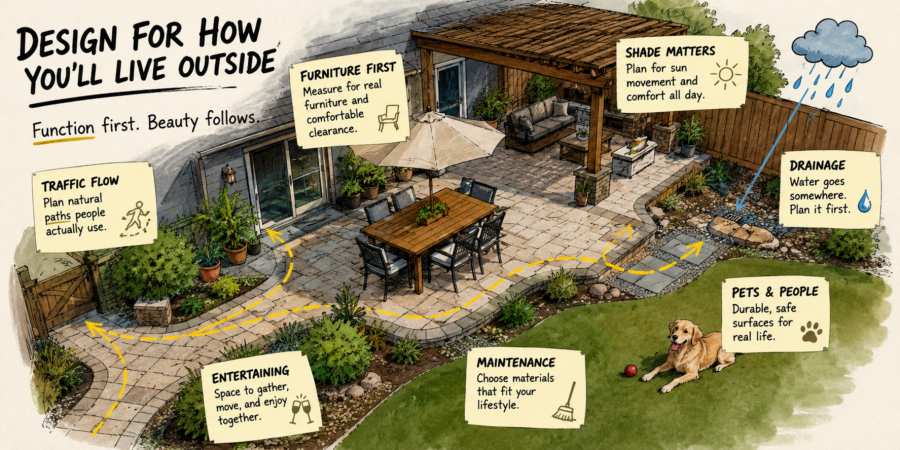
That mismatch happens more often than people expect. Outdoor projects frequently begin with colors, patterns, and material samples spread across a kitchen table like contestants in a beauty pageant. Appearance matters, certainly, but practical design has a habit of collecting dust while everyone debates whether stone gray feels more sophisticated than charcoal gray.
Designing outdoor spaces backwards offers a different approach. Instead of asking what looks best first, the smarter question becomes: How will this space actually be used? Once that answer is clear, the visual choices become easier and far more successful.
Traffic Flow Comes Before Fancy Ideas
People move through outdoor areas in predictable ways. They carry groceries, guide children, chase escaped dogs, haul gardening supplies, and occasionally attempt to balance three drinks and a plate of grilled food with reckless optimism.Ignoring movement patterns creates frustration that no stylish surface can fix.
Walkways and patios should support natural travel routes rather than forcing awkward detours. If the path from the driveway to the back door cuts across the lawn, chances are people will continue using that shortcut regardless of how lovingly the landscaping was planned. Grass worn into narrow trails tells the truth with remarkable honesty.
Before choosing materials or layouts, homeowners benefit from observing how they already move around the property. These patterns reveal where walkways belong and where open space should remain.
- Identify common routes between doors, gates, and gathering areas
- Allow enough width for comfortable passing
- Avoid sharp corners that interrupt movement
- Consider nighttime use and visibility
Furniture Deserves a Seat at the Planning Table
Furniture is often treated like an afterthought, which explains why some patios appear to have been designed for decorative air molecules rather than actual chairs.This part requires serious planning.
Tables, seating, loungers, and outdoor kitchens need space not only to exist but to function comfortably. A dining area may technically fit within a patio footprint while still leaving guests performing careful sideways maneuvers worthy of a parking garage challenge.
Measurements matter. Leave enough clearance for chairs to pull out, pathways to remain open, and conversation areas to feel inviting instead of compressed. Outdoor living works best when movement feels effortless rather than negotiated.
Choosing layout dimensions before selecting surface materials prevents costly redesigns and helps the finished space feel purposeful rather than improvised.
Shade Is Not a Luxury Feature
Sunlight photographs beautifully and negotiates poorly.An outdoor area that receives intense sun for most of the day may look attractive on a floor plan yet remain strangely empty during the hottest hours. People naturally avoid spaces that feel like reheated sidewalks.
Shade should be considered early in the planning process rather than added later as a desperate rescue mission involving oversized umbrellas and regret.
Trees, pergolas, covered sections, and strategic orientation all influence comfort. Morning and afternoon sun behave differently, and understanding how light moves across the property can shape better decisions about seating, dining, and relaxation areas.
Some spaces benefit from full exposure, particularly gardens or lounging spots designed for cooler seasons. Others require protection if they are meant for regular daily use.
Drainage Has No Interest in Design Trends
Water follows gravity without consulting mood boards.This is where outdoor planning becomes serious. Drainage problems can damage surfaces, create slipping hazards, encourage erosion, and shorten the life of otherwise excellent construction.
A beautiful patio that collects standing water after rainfall quickly loses its charm. Puddles have a remarkable talent for announcing poor planning with unnecessary enthusiasm.
Surface slope, grading, runoff direction, and nearby structures all deserve attention before materials are selected. Some surfaces handle drainage more effectively than others, but even premium materials struggle when underlying water management is ignored.
Planning backwards means asking where rainwater will go long before discussing finish textures or decorative borders.
Pets, Parties, and Future Maintenance Matter
Outdoor spaces rarely remain frozen in perfect showroom conditions.Dogs carve routes with military determination. Children invent games that no designer anticipated. Guests gather where conversation feels natural rather than where furniture diagrams suggested they might politely remain.
That reality should guide design.
Consider whether surfaces become slippery, trap dirt, heat excessively, or demand constant upkeep. A high-maintenance material may look spectacular at installation and considerably less magical after several seasons of weather and daily use.
Entertaining habits also deserve honest assessment.
- Large gatherings need circulation space
- Families may prioritize durability over delicate finishes
- Pet owners benefit from surfaces that clean easily
- Low-maintenance layouts often provide greater long-term satisfaction
Paving the Way for Smarter Choices
Outdoor spaces succeed when they support life rather than merely frame it.Starting with use creates stronger design decisions from the beginning. Traffic flow, furniture, shade, drainage, pets, entertaining, and maintenance are not obstacles to creativity. They are the framework that allows attractive design to perform well over time.
Appearance still matters, of course. Nobody is campaigning for gloomy slabs and accidental geometry. Yet when practical needs lead the process, style becomes more than decoration. It becomes lasting comfort, easier maintenance, and a space people genuinely enjoy using instead of admiring briefly through the window while wondering where the puddle came from.
Article kindly provided by hugosconcrete.com