Perfection Has a Plastic Feel
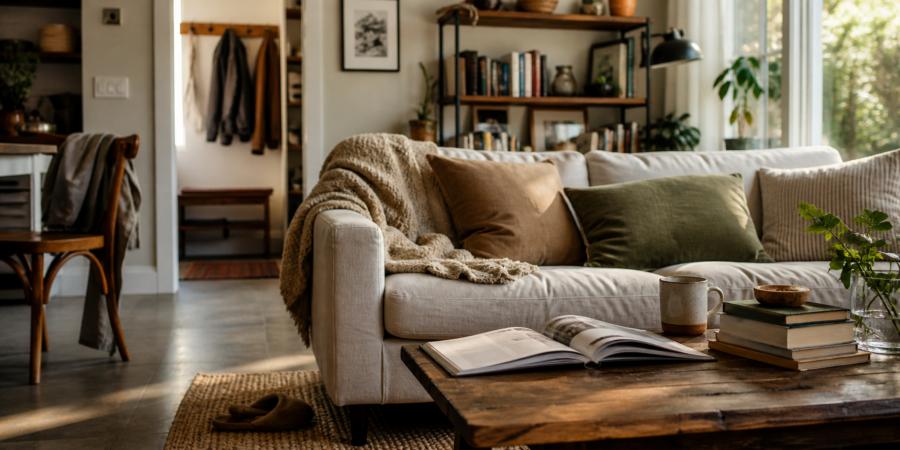
Perfectly styled rooms aim for control. Every cushion is karate-chopped, every surface gleams, and not a single object dares to be out of alignment. While that might impress in person for a moment, photographs tend to expose the artificiality. The camera flattens the scene, and without variation or subtle irregularities, the result can feel staged to the point of lifelessness.Lived-in spaces, on the other hand, offer depth. A slightly crooked stack of books, a throw blanket that looks casually abandoned, or a coffee mug left mid-thought suggests presence. These elements provide visual anchors, giving the viewer something to explore rather than just admire from a distance.
Clues of Life Invite the Viewer In
A photograph becomes more compelling when it hints at a story. A chair angled toward a window implies someone was recently there. A pair of shoes by the door suggests arrival or departure. Even a loosely folded newspaper can make a room feel active rather than preserved.There’s a delicate psychology at play. People respond to spaces that feel relatable. A spotless, untouched room can feel intimidating, as though sitting down would be a violation. By contrast, a room with subtle imperfections feels welcoming. It quietly communicates that real life is allowed here.
Texture Beats Sterility Every Time
Flat, overly coordinated interiors often lack the richness that makes a photograph engaging. Texture—both visual and tactile—adds complexity. Think linen curtains that fall a little unevenly, a worn leather chair, or a rug that shows gentle signs of use.These details catch light in interesting ways. They create shadows, highlights, and variations that give the image dimension. Without them, even the most expensive room can look oddly two-dimensional, like a catalog page that forgot to include personality.
Interestingly, a space doesn’t need to be cluttered to feel alive. It simply needs contrast. Smooth against rough, light against dark, structured against relaxed. When everything is too consistent, the eye gets bored—and bored viewers don’t linger on photos.
What to Leave In Without Overdoing It
Striking the right balance means choosing details that suggest life without tipping into chaos. Not every sign of living improves a photo. Some things are better left outside the frame unless the goal is documentary realism.- A few books with slightly uneven stacking
- A casually draped blanket or textile
- Natural wear on materials like wood or leather
- Subtle asymmetry in decor placement
What to Remove Before You Click the Shutter
Not all signs of life deserve a starring role. There’s a difference between “lived-in” and “someone gave up halfway through cleaning.” Photographs are selective by nature, so it helps to edit with intention.Items that introduce distraction rather than character should quietly exit the scene. Think tangled charging cables, half-empty snack wrappers, or anything that suggests chaos rather than comfort. A remote control can stay if it feels intentional; five of them piled together start to look like a control center for a spaceship nobody asked to pilot.
Strong visual clutter competes with the composition. When the eye doesn’t know where to rest, the image loses its impact. Removing a handful of unnecessary items often does more for a photo than rearranging the entire room.
- Loose cables and electronic clutter
- Overly personal or distracting items
- Anything that blocks light or key focal points
- Objects that feel accidental rather than intentional
Balance Between Tidy and Sterile
There’s a narrow path between a room that feels welcoming and one that feels over-sanitized. Finding that balance requires restraint. It’s tempting to keep adjusting—straightening, aligning, removing—until the space looks “perfect.” That’s usually the moment it stops feeling real.A useful approach is to stage the room, then deliberately undo a small part of that effort. Shift a cushion slightly. Let a curtain fall naturally instead of forcing symmetry. Place an object just off-center. These minor adjustments break the rigidity and introduce a sense of ease.
Lighting plays a role here as well. Natural light, with its unevenness and subtle shifts, complements lived-in details. Artificial lighting that is too uniform can flatten those nuances, pushing the image back toward that showroom look.
Why This Matters for Homeowners and Hosts
For homeowners and Airbnb hosts, photographs are often the first impression. Guests aren’t just evaluating cleanliness or style—they’re imagining themselves in the space. A room that feels overly staged can create distance, while one that feels gently inhabited invites connection.The goal isn’t to mislead but to present a believable version of the space at its best. A thoughtfully placed book or a neatly folded throw can signal comfort without suggesting neglect. It’s about showing a room that’s ready to be used, not just admired from afar.
For Photographers Chasing Authenticity
Photographers often face the challenge of making spaces feel both aspirational and real. Leaning too far in either direction can weaken the image. Authenticity tends to win because it resonates longer.Pay attention to how objects interact. A slightly open door, a chair not perfectly tucked in, or a shadow falling across a textured surface can add quiet drama. These details don’t demand attention, but they reward it.
And occasionally, stepping back and resisting the urge to “fix” everything is the smartest move. Rooms, like people, rarely look their best when they’re trying too hard.
Mess-terpiece in the Making
A well-photographed room doesn’t need perfection to succeed. It needs presence. The subtle evidence of daily life—carefully curated but not erased—creates warmth that no amount of polishing can replicate.The trick lies in knowing when to stop adjusting. Leave just enough behind to suggest a story, and remove just enough to keep the story clear. Somewhere in that middle ground, a space stops looking staged and starts feeling believable—and that’s where photographs come alive.
Article kindly provided by gdholland.co.uk