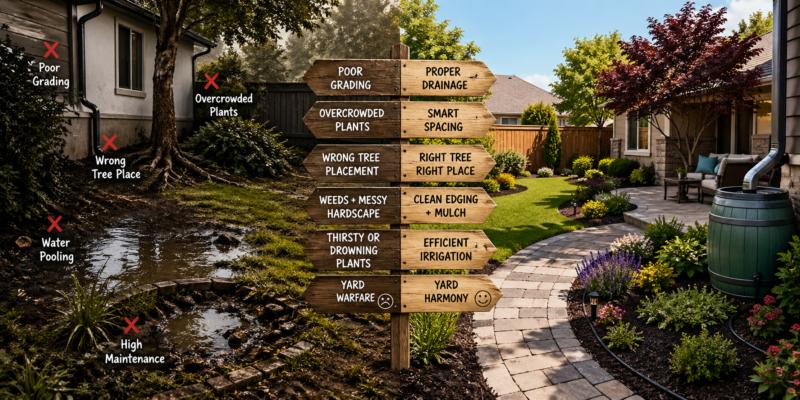
Many maintenance headaches don’t come from neglect—they come from design choices that quietly stack the odds against you. The frustrating part is that these mistakes often look perfectly fine at first. It’s only later, when time and weather get involved, that the problems reveal themselves.
Grading That Sends Water on a Tour of Your Problems
Water has a simple philosophy: it goes wherever it’s easiest. If your yard’s grading isn’t guiding it away from your home, it will gladly explore alternative routes—like pooling near your foundation or turning your lawn into a seasonal wetland.A subtle slope toward the house may not look like much, but it’s enough to create ongoing issues. Standing water leads to root rot, mosquito breeding, and soil erosion. Over time, it can even compromise structures.
The fix isn’t glamorous, but it’s effective. Regrading key areas so water flows away from the home, adding swales, or installing proper drainage can transform how your yard behaves. Suddenly, rain becomes less of an event and more of a background detail.
Plants That Forgot Personal Space Exists
There’s something optimistic about planting things close together. It creates that full, lush look right away. Unfortunately, plants don’t stay politely small just because they started that way.Overcrowding leads to poor air circulation, which encourages disease. It also forces roots to compete for nutrients and water, meaning everything struggles instead of thriving. Maintenance becomes a constant cycle of trimming, thinning, and trying to convince a shrub to stop behaving like it owns the place.
A better approach is to plant with maturity in mind. That tiny shrub with a neat label will eventually want more room than it’s currently getting. Spacing plants properly reduces long-term work and keeps everything healthier.
And yes, it may look a little sparse at first. Think of it as your yard practicing patience—something it will later reward you for.
Trees Placed Like Afterthoughts
Planting a tree is often treated as a quick decision. Find a spot, dig a hole, and hope for the best. Years later, that decision can turn into a slow-motion conflict between roots, sidewalks, pipes, and even your roofline.Trees planted too close to structures create shade where you may not want it, drop debris into gutters, and develop root systems that push against hard surfaces. Some species are particularly enthusiastic about this, treating underground pipes like a personal invitation.
Choosing the right tree for the right location—and giving it enough distance from structures—prevents a long list of future repairs. It also keeps you from having to explain why a perfectly good driveway now has a dramatic new crack running through it.
More importantly, thoughtful placement allows trees to grow into assets rather than ongoing negotiations.
Hardscaping That Traps Work Instead of Saving It
Patios, walkways, and edging are supposed to reduce maintenance. When they’re designed poorly, they do the opposite. Uneven pavers collect water, encourage weed growth, and create tripping hazards that seem to appear exactly when you’re carrying something fragile.Improper base preparation is often the culprit. Without a solid foundation, materials shift over time, opening gaps where weeds settle in like permanent tenants. Edging that isn’t installed correctly allows grass and soil to creep across boundaries, slowly erasing the clean lines you paid for.
A well-installed hardscape includes proper grading, a stable base layer, and materials suited to the climate. It’s less about appearance in the moment and more about whether it holds up after a few rainy seasons and a stubborn summer.
When done right, hardscaping becomes the part of your yard that quietly behaves itself. No surprises. No sudden need to “just fix one thing” that turns into an entire afternoon.
Grass in Places That Clearly Don’t Want Grass
Lawns have a reputation for being simple, but they’re selective about where they thrive. Shady corners, steep slopes, and narrow strips between structures often end up as ongoing problem areas.Grass in deep shade grows thin and patchy, inviting weeds to take over. On slopes, it struggles to establish roots while water rushes past, taking soil along with it. Those narrow strips beside fences or walls become awkward zones that require trimming tools with the precision of a surgeon.
Replacing these areas with ground covers, mulch beds, or hardscape features reduces maintenance dramatically. It also removes the need to constantly rescue grass from conditions it clearly disapproves of.
Sometimes the smartest move is admitting defeat early and giving that space a different job.
Irrigation That Either Overthinks or Underperforms
Watering systems are meant to simplify care, yet many yards end up with setups that either drown plants or leave them negotiating for survival. Misaligned sprinkler heads, uneven coverage, and outdated timers all contribute to wasted water and inconsistent growth.Overwatering is particularly sneaky. It creates shallow root systems, encourages fungal issues, and inflates water bills without improving plant health. Underwatering, on the other hand, leads to stressed plants that require constant attention just to stay alive.
A well-designed irrigation system considers plant types, sun exposure, and soil conditions. Drip irrigation for garden beds and properly spaced sprinkler heads for lawns create efficiency without overcomplication.
- Adjust watering schedules seasonally
- Check for clogged or misaligned heads regularly
- Group plants with similar water needs together
Yard Work or Yard Warfare
Small design decisions rarely stay small. They compound quietly, turning routine upkeep into a series of avoidable battles. A yard that fights you is usually just following instructions it was given early on—whether intentional or not.Correcting these issues doesn’t require starting over. It’s about identifying where the design is working against natural patterns—water flow, plant growth, sunlight—and making adjustments that align with them instead.
When those adjustments are in place, maintenance shifts from constant correction to simple care. The yard still needs attention, but it stops behaving like it has its own agenda.
Article kindly provided by southjerseylandscapers.com