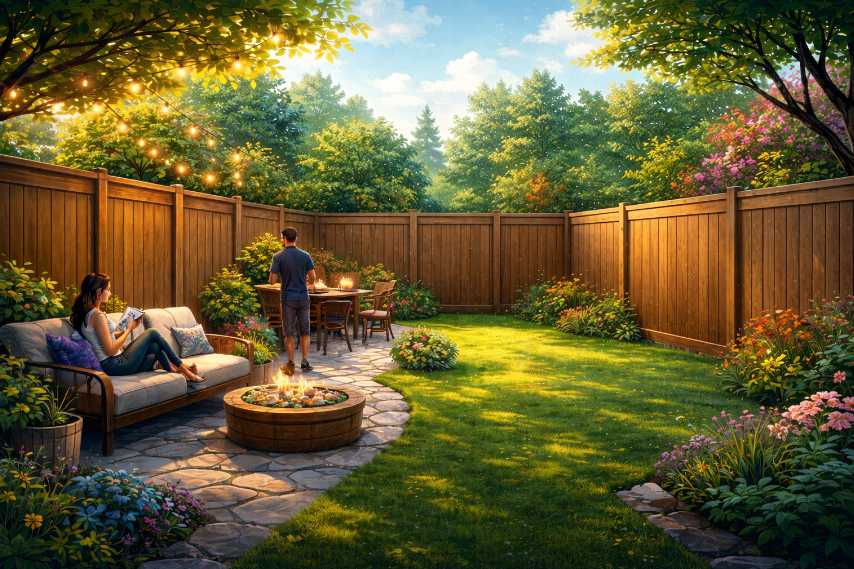
Fences quietly influence how people behave. A wide-open yard might look spacious, but it can subtly discourage relaxed, personal use. On the flip side, a thoughtfully enclosed space can make even a modest yard feel like a private retreat where you actually want to spend time.
Height and the Comfort Threshold
Fence height plays a larger role in psychology than most people expect. A low fence might define boundaries, but it rarely creates a sense of separation. It’s more of a polite suggestion than a firm statement. You can still see neighbors, and they can definitely see you attempting yoga poses that should have remained indoors.Taller fences, however, create a noticeable shift. Once a fence rises above eye level, the yard begins to feel like a contained space rather than an extension of the street. This can increase comfort and encourage longer use of the space. People linger more. They eat outside more. They stop worrying about whether their neighbor is silently critiquing their grilling technique.
That said, there’s a balance. Extremely tall, solid barriers can sometimes feel isolating or even slightly oppressive if the space is small. The goal is not to build a fortress, unless that’s genuinely the vibe you’re going for.
Spacing and the Illusion of Openness
Not all privacy comes from blocking views entirely. Spacing between fence boards can create a layered effect where visibility is reduced without being completely eliminated. This is where design starts to play with perception.A fence with narrow gaps allows light and airflow while still limiting clear sightlines. From a distance, it appears more open, but up close, it provides a surprising level of privacy. It’s a bit like wearing sunglasses—technically transparent, but still very effective at keeping things discreet.
Wider spacing, on the other hand, leans toward openness. It can make a yard feel connected to its surroundings, which is great if you enjoy interaction or want to maintain a sense of community. Just be aware that “connection” can sometimes translate to “everyone knows when you’re reheating leftovers outside.”
Designers often use alternating board patterns or staggered layouts to strike a middle ground. These approaches disrupt direct sightlines without making the fence feel heavy or closed off.
Material and Emotional Tone
Materials don’t just affect durability; they shape how a space feels. Wood, for example, tends to create warmth and a sense of natural comfort. It softens the boundary and blends into the environment, making the yard feel less like it’s been divided and more like it’s been gently framed.Vinyl and composite materials often provide cleaner lines and a more polished look. They can feel modern and structured, which some people find calming, while others might interpret it as slightly formal. It’s the difference between a cozy backyard hangout and a space that makes you wonder if you should have worn nicer shoes.
Metal fences introduce yet another tone. They can feel secure and durable, but depending on the design, they may also emphasize visibility over privacy. A sleek metal fence can look fantastic, but it won’t do much to hide your questionable lawn décor choices.
Choosing a material isn’t just about maintenance or cost. It’s about the atmosphere you want to create when you step outside.
Designing for How You Actually Live
A fence shouldn’t just look good from a distance; it should support the way the space is used day to day. Someone who loves hosting weekend gatherings will likely benefit from a design that balances privacy with a sense of openness. Guests tend to feel more relaxed when a space doesn’t feel boxed in, even if it’s technically enclosed.On the other hand, a yard meant for quiet downtime calls for stronger visual separation. Reading, gardening, or simply sitting in silence becomes much easier when there’s no sense of being observed. Privacy, in this case, isn’t just about blocking views—it’s about removing subtle distractions.
Small adjustments can make a big difference:
- Position seating areas away from direct sightlines through gates or gaps
- Use partial screening near patios instead of enclosing the entire yard
- Layer fencing with plants or trellises to soften boundaries without losing privacy
Perceived Safety and Subtle Boundaries
A fence also signals where personal space begins and ends. This has a direct impact on how safe a yard feels. Clear boundaries reduce uncertainty. When a space is defined, it becomes easier to relax within it.Interestingly, total enclosure isn’t always necessary to achieve this effect. Even a semi-private fence can create a sense of security if it establishes a visible perimeter. The brain tends to fill in the gaps, treating the boundary as complete even when it technically isn’t.
However, visibility works both ways. Being able to see out can enhance comfort, especially in areas where total isolation might feel uneasy. A fence that allows limited outward views while restricting inward ones often strikes the right balance.
And then there’s the practical side: a well-designed fence discourages uninvited shortcuts across your yard. Nothing disrupts a peaceful afternoon quite like someone casually deciding your lawn is part of a public walking route.
When Boundaries Become Invitations
Fences aren’t just barriers; they’re signals. They tell people how to interact with a space—or whether to interact at all. A low, open design suggests approachability. A tall, solid structure suggests privacy. Most homes fall somewhere in between, and that middle ground is where thoughtful design really shines.The key is aligning the fence with the feeling you want from your yard. Not just how it looks, but how it behaves. A well-chosen design encourages the right kind of use without needing constant adjustment.
Because in the end, a yard isn’t just a piece of land. It’s a space where habits form, where people unwind, and occasionally where someone attempts to assemble outdoor furniture without instructions and regrets every life choice that led to that moment.
Get the boundaries right, and everything else tends to fall into place—quietly, naturally, and without making a big show of it.
Article kindly provided by southjerseyfenceanddeck.com