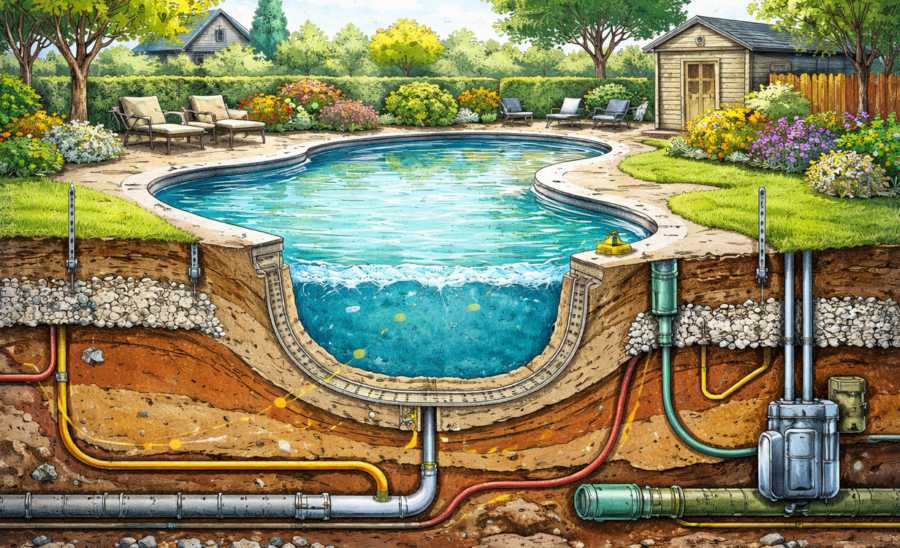
Water, concrete, steel, and soil are locked into a long-term relationship once a pool is installed. If the ground is cooperative, the pool settles in happily and behaves itself for decades. If not, the pool may slowly rebel with cracks, shifting, leaks, and repair bills that arrive with impressive confidence.
This isn’t about fearmongering or obsessing over dirt. It’s about understanding that a pool’s lifespan is heavily influenced by things most people never think about after mowing the lawn.
Soil Types Are Not Created Equal
Some soils are dependable. Others are dramatic.Sandy soil drains well and rarely throws surprises, but it can shift if not properly compacted. Clay, on the other hand, expands when wet and contracts when dry, which is fine for pottery and terrible for rigid structures. Loam sits somewhere in the middle, behaving politely when properly prepared.
When soil expands and contracts unevenly, the pool shell absorbs stress it was never designed to handle. Over time, that stress can translate into structural cracks or plumbing failures that seem mysterious until the ground story is told.
This is one of the least funny parts of pool ownership, and it deserves a serious tone. Ignoring soil composition doesn’t save money. It simply delays the invoice.
Drainage Is Either Your Best Friend or a Silent Saboteur
Water loves gravity. It also loves hanging around if given the opportunity.Poor drainage allows water to collect around the pool structure, increasing hydrostatic pressure. That pressure can push against walls, lift shells, and encourage soil movement. None of these actions are helpful or charming.
Good drainage quietly does its job without applause. Bad drainage waits patiently and then makes itself known after a heavy rain, usually when repairs are least convenient.
A yard that sheds water efficiently often outperforms a visually perfect yard that traps it.
Slope Adds Personality to the Project
A sloped yard can be beautiful. It can also be demanding.Slopes introduce lateral pressure and erosion risks that flat yards never experience. Retaining systems, grading strategies, and reinforced foundations become essential rather than optional. Skipping these steps can turn gravity into an unpaid consultant with strong opinions.
Handled correctly, slopes are manageable. Handled casually, they become recurring maintenance conversations that never quite end.
A Simple Site Check Before Anyone Starts Digging
Before plans feel final, a basic assessment can reveal most red flags.- Does water pool in the yard after rain?
- Is the ground soft or spongy in certain areas?
- Are there visible slopes or signs of erosion?
- Do nearby structures show cracking or settling?
What Lies Beneath Can Be Expensive
Underground utilities are the ultimate surprise guests. They arrive uninvited and refuse to move quietly.Gas lines, electrical conduits, drainage pipes, and old irrigation systems can complicate excavation and compromise long-term stability if rerouted poorly. Even when legally and safely addressed, utilities often force design adjustments that influence how weight is distributed across the site.
This section deserves a serious tone. Striking or ignoring underground infrastructure isn’t a minor hiccup. It can halt construction, inflate costs, and introduce long-term vulnerabilities that surface years later in the form of leaks or shifting ground.
Maintenance Costs Are Written in the Dirt
Two pools can look identical and live very different lives.A well-sited pool typically requires fewer structural repairs, experiences less plumbing stress, and maintains its finish longer. A poorly sited pool often demands frequent adjustments, crack monitoring, and an ongoing relationship with repair professionals who start recognizing your phone number.
This isn’t bad luck. It’s physics with a calendar.
Ground movement doesn’t announce itself loudly. It nudges, presses, and repeats until small issues graduate into expensive ones.
Why Preparation Always Beats Repair
Proper site preparation isn’t glamorous. It doesn’t sparkle or shimmer under patio lights. What it does is quietly protect everything above it.Soil stabilization, drainage planning, and slope management cost money upfront, but they are predictable costs. Repairs caused by neglect are unpredictable and usually arrive bundled with frustration.
This is where humor briefly steps aside. Choosing not to prepare a site thoroughly is not a gamble that occasionally pays off. It is a delayed expense with interest.
Reading Your Yard Like a Long-Term Contract
A yard tells stories to anyone willing to look closely. Cracks in nearby walkways, uneven patios, soggy patches, and exposed roots are all footnotes explaining what the ground likes to do over time.Listening early allows design and construction choices to work with the land instead of challenging it. Ignoring those signals is how small quirks become ongoing negotiations with gravity and moisture.
The ground will always win eventually. The goal is to make it a cooperative winner.
Keeping Things on Solid Ground
Pools don’t fail dramatically all at once. They complain quietly, one inch at a time.When soil type, drainage, slope, and underground conditions are respected, a pool becomes a long-term asset rather than a recurring project. The surface may be where the fun happens, but longevity is decided below grade, where jokes stop and preparation earns its keep.
Article kindly provided by trevipoolsandspas.ca