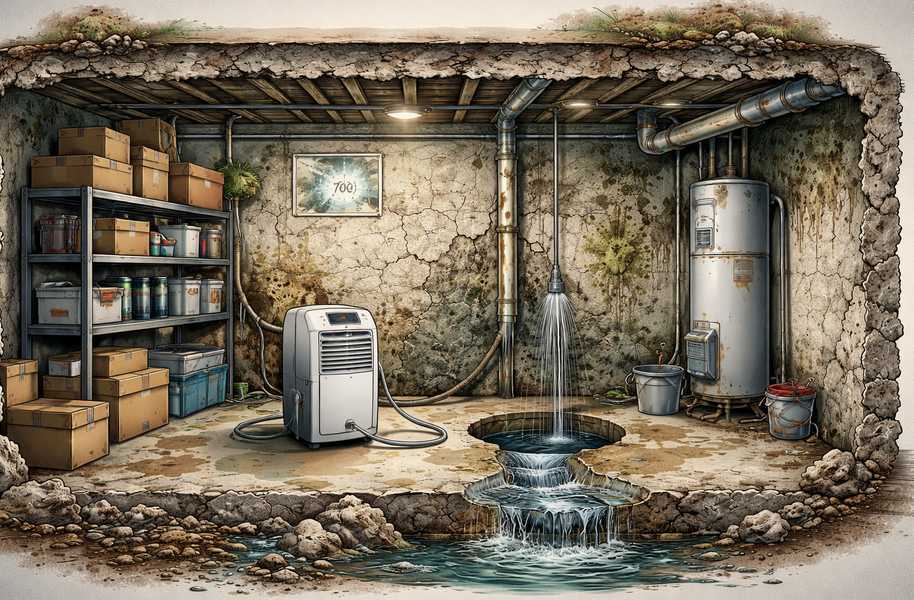
At its core, mold needs three things to thrive: moisture, organic material, and a comfortable temperature. Basements reliably supply all three. Concrete walls may look solid and invincible, but they are porous. Groundwater pressure pushes moisture through tiny capillaries in the foundation. Even when there is no visible leak, moisture can seep inward slowly and consistently. Add cardboard boxes, wooden framing, or drywall paper backing, and you have a well-stocked buffet.
Humidity is often the quiet accomplice. Because basements are cooler, warm air from upstairs condenses when it drifts downward. That condensation settles on pipes, walls, and floors. Over time, it creates pockets of dampness that remain undisturbed for weeks. Mold spores, always present in the air, simply wait for these conditions to align.
Why Below-Grade Spaces Struggle With Moisture
Unlike upper floors, basements sit against soil. Soil retains water. After heavy rain or snowmelt, the ground becomes saturated and exerts hydrostatic pressure against foundation walls. Even minor cracks allow moisture intrusion. A small fissure may not seem urgent, but mold does not require dramatic flooding to take hold. Persistent dampness is more than enough.Drainage issues compound the problem. Improper grading around the home directs rainwater toward the foundation rather than away from it. Clogged gutters overflow and deposit water near the basement walls. Downspouts that discharge too close to the house create miniature moats that no one asked for.
Plumbing leaks can also turn a basement into a moisture laboratory. A slow drip from a supply line or a pinhole leak in a copper pipe might remain unnoticed for months. During that time, drywall absorbs water, insulation becomes damp, and mold quietly spreads behind finished surfaces.
Practical Steps to Control Humidity
Managing humidity is one of the most effective ways to reduce mold risk. Basements benefit from active moisture control rather than wishful thinking. A hygrometer provides a simple starting point. Ideally, indoor humidity should remain below sixty percent, and many experts recommend closer to fifty percent in basement environments.Dehumidifiers are often essential. Choose a unit sized appropriately for the square footage and moisture load. Continuous drainage into a floor drain or sump pump eliminates the chore of emptying water trays, which few people remember until the machine has politely stopped working.
Air circulation also matters. Stagnant air creates localized humidity pockets. Ceiling or portable fans help maintain movement, particularly in corners and behind stored items. Avoid pressing boxes directly against foundation walls. Leave a small gap to promote airflow and reduce condensation buildup.
Insulating cold water pipes prevents condensation from forming on their surfaces. Foam pipe insulation is inexpensive and simple to install. It may not be glamorous home improvement, but neither is scrubbing mold from a ceiling.
For unfinished basements, consider sealing concrete walls and floors with appropriate waterproof coatings. While sealants are not a substitute for structural repairs, they can reduce minor moisture migration through porous surfaces.
Preventing Water Intrusion at the Source
Humidity control addresses symptoms; exterior water management addresses causes. Start outside. Ensure the ground slopes away from the foundation by at least several inches over the first few feet. This simple grading adjustment can significantly reduce water pressure against basement walls.Maintain gutters and downspouts diligently. Clean them regularly and extend downspouts several feet away from the home. These measures may seem routine, yet they directly influence how much water reaches the foundation during storms.
Inspect foundation walls for cracks. Hairline fractures should be evaluated and sealed using appropriate materials. Larger structural concerns warrant professional assessment. Ignoring visible cracks rarely leads to improvement on its own.
Sump pumps, where installed, require periodic testing. Pour water into the sump pit to confirm proper activation and discharge. A pump that fails during heavy rainfall can transform a manageable moisture issue into widespread water damage within hours.
Basements may not receive the same admiration as kitchens or living rooms, but they deserve strategic attention. When moisture is controlled and intrusion prevented, mold loses its favorite hideout. More importantly, homeowners gain a healthier, more durable foundation beneath their feet.
Smart Storage and Finishing Choices
Finishing a basement adds living space, but it also introduces materials that mold finds delightful. Standard drywall, carpeting, and untreated wood can absorb moisture and hold it long enough for spores to settle in comfortably. If a basement has a history of dampness, material selection should be deliberate rather than decorative.Consider moisture-resistant drywall, rigid foam insulation, and vinyl or tile flooring instead of wall-to-wall carpet. These materials do not eliminate risk, but they reduce the amount of organic matter available for mold growth. If carpeting feels essential for comfort, use area rugs that can be lifted and dried rather than fully installed padding that stays hidden and damp.
Storage deserves equal attention. Cardboard boxes are essentially compressed plant fiber, which makes them an attractive food source. Swap them for plastic bins with tight-fitting lids. Elevate storage on metal shelving to keep belongings off the floor. It also makes cleaning easier and prevents minor seepage from turning into a full inventory loss.
Keep clutter to a minimum. A crowded basement restricts airflow and creates shaded corners where moisture lingers. Organized spaces are easier to inspect, and routine visual checks can catch small problems before they become large remediation projects.
Routine Inspections and Long-Term Maintenance
Basement mold prevention is less about one grand intervention and more about consistent oversight. Establish a seasonal checklist. After heavy rain, inspect walls and floors for damp spots. Look for discoloration, peeling paint, or musty odors. These subtle signs often appear before visible mold colonies develop.Monitor plumbing lines, especially near water heaters, washing machines, and utility sinks. Even minor corrosion or loose fittings should be addressed promptly. Replace worn hoses with braided stainless steel versions to reduce the likelihood of sudden failure.
Ventilation systems deserve attention as well. If the basement includes HVAC components, ensure condensate lines are clear and draining properly. Clogged lines can overflow and create hidden moisture behind equipment. Changing air filters regularly improves airflow and reduces the accumulation of airborne spores.
If a basement ever experiences flooding, act quickly. Remove standing water, dry affected areas thoroughly, and discard materials that cannot be fully dried within a short period. Time matters. Mold can begin to grow within days under the right conditions.
When Professional Help Makes Sense
Some situations extend beyond routine maintenance. Persistent mold growth, recurring water intrusion, or structural cracks may require specialized evaluation. Professionals can assess moisture sources using advanced tools such as thermal imaging and moisture meters. They can also recommend appropriate remediation methods that address underlying causes rather than surface symptoms.Attempting to handle extensive mold contamination without proper containment can spread spores to other parts of the home. Protective equipment and controlled removal processes are important in larger cases. While smaller areas may be manageable with careful cleaning, widespread growth calls for experience and proper safeguards.
Knowing when to seek assistance is not a sign of defeat. It is a practical decision rooted in protecting both property and health.
Raising the Basement Bar
Basements do not have to remain shadowy problem zones. With deliberate moisture control, thoughtful material choices, and consistent maintenance, they can become stable, usable spaces rather than biological experiments.Treat the basement as part of the home’s core infrastructure rather than an afterthought. Check humidity levels, maintain drainage systems, and address small leaks immediately. These steady actions create an environment where mold struggles to gain traction.
A dry basement is rarely dramatic. It does not announce itself. It simply performs quietly, supporting the structure above it. And in the world of homeownership, that kind of quiet reliability is worth preserving.
Article kindly provided by verifiedremediation.com