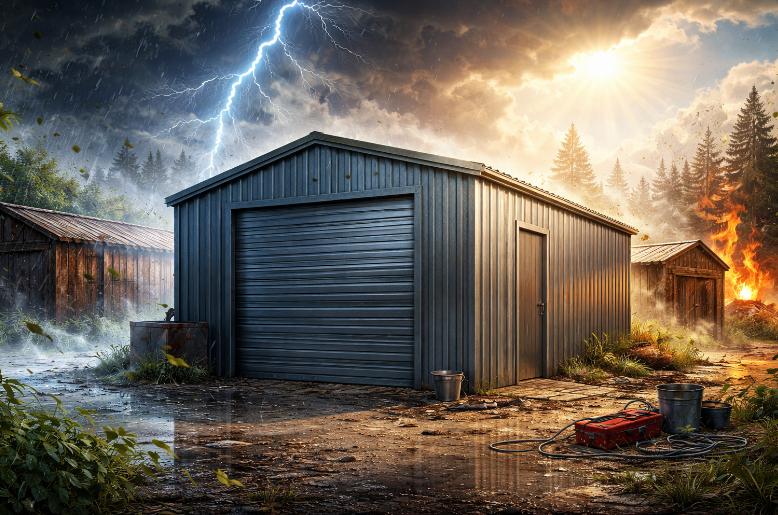
Steel, particularly galvanised steel, has a reputation for shrugging off conditions that make wood creak, swell, or surrender entirely. That difference isn’t magic or marketing—it’s physics, chemistry, and a bit of clever engineering working together in ways that are surprisingly easy to understand once you look under the surface.
Why Wood and Steel React So Differently
Wood is alive long after it’s been cut. Not in a poetic sense, but in a stubborn, cellular one. It absorbs moisture, releases it, expands, contracts, and occasionally decides to twist itself into shapes no builder ever intended. That’s because wood is hygroscopic—it actively interacts with water in the air.Steel, on the other hand, doesn’t absorb moisture. It may corrode if left unprotected, but it doesn’t swell or warp because humidity changed its mood. Its molecular structure stays consistent regardless of whether it’s a dry summer afternoon or a damp winter morning.
This leads to a practical outcome most people notice quickly:
- Wood changes shape over time, which can affect doors, joints, and structural integrity
- Steel maintains its dimensions, keeping everything aligned and functional
The Science Behind Galvanisation
Bare steel left outside will rust. That part is unavoidable. What changes the story is galvanisation, a process where steel is coated with a layer of zinc. This isn’t a decorative finish—it’s a sacrificial shield with a very specific job.Zinc corrodes before steel does. When moisture and oxygen come into contact with the surface, the zinc reacts first, forming a protective barrier that slows further corrosion. Even if the coating gets scratched, the zinc continues to protect nearby exposed steel through a process called cathodic protection.
In simpler terms, the zinc takes the damage so the steel underneath doesn’t have to. It’s the structural equivalent of sending in a bodyguard who doesn’t complain about the weather.
This is why galvanised steel can endure years of exposure with minimal degradation, while untreated materials begin to show wear far sooner.
Heat, Fire, and Structural Stability
Temperature swings are another quiet test of durability. Materials expand when heated and contract when cooled, but not all materials behave equally under these changes.Steel expands predictably and uniformly. Wood expands unevenly depending on grain direction and moisture content, which can lead to internal stress and eventual cracking. Over time, repeated cycles of heating and cooling can exaggerate these weaknesses.
Then there’s fire resistance, which tends to be overlooked until it suddenly isn’t. Wood is combustible. Steel is not. While steel can lose strength at extremely high temperatures, it doesn’t ignite or contribute fuel to a fire. That distinction alone can significantly affect how a structure performs under extreme conditions.
A wooden structure faced with fire becomes part of the problem. A steel one, at the very least, refuses to volunteer.
Coatings, Layers, and the Long Game
Galvanisation is only part of the story. Many modern steel structures add additional coatings—paint systems, polymer layers, or powder coatings—that act like extra armor against the environment. These layers don’t just improve appearance; they slow down wear by blocking moisture, UV radiation, and airborne pollutants.Sunlight, for example, breaks down many materials over time. Wood fades, cracks, and dries out unevenly. Protective coatings on steel reflect or absorb UV radiation in a controlled way, preventing that slow degradation. It’s less about looking shiny and more about not quietly falling apart while nobody is watching.
There’s also a maintenance advantage here. Recoating steel surfaces is relatively straightforward compared to repairing warped timber or replacing sections that have rotted from the inside out. One is a refresh. The other is a small construction project you didn’t plan for.
Construction Methods That Actually Matter
Material choice is only half the equation. How that material is assembled plays a huge role in how it survives outdoors. Steel structures often rely on prefabricated panels, precise joins, and fastening systems designed to distribute stress evenly.That precision has a practical benefit. Loads from wind, snow, and general use are spread across the structure rather than concentrated in weak points. Wood construction, while versatile, can introduce variability depending on cuts, joins, and natural imperfections in the material itself.
Well-designed steel builds also account for airflow and drainage, which helps prevent condensation buildup inside enclosed spaces. Moisture isn’t just an external threat—it can quietly accumulate inside if the structure isn’t designed to handle it.
In other words, durability isn’t just about resisting the weather outside, but managing the climate inside as well. Steel structures tend to approach this like a system, not an afterthought.
Why Warping Rarely Wins Against Steel
Warping is essentially a material losing the argument with uneven forces—moisture, heat, or internal stress pulling in different directions. Wood is particularly vulnerable because its fibers respond differently depending on orientation and exposure.Steel doesn’t have that problem. Its uniform composition means it reacts consistently across its entire surface. When it expands or contracts, it does so evenly, reducing the chance of distortion.
This is why steel doors continue to close properly years later, while wooden ones sometimes require a firm shoulder and a bit of optimism. Precision tends to age better than improvisation.
Ironing Out the Final Details
Durability outdoors isn’t about resisting a single dramatic event. It’s about surviving thousands of small, repetitive stresses—rainfall, temperature shifts, sunlight, and time itself. Steel performs well not because it’s indestructible, but because it responds predictably to those stresses and can be protected in ways that extend its lifespan significantly.Wood has its place, especially where aesthetics or flexibility matter. But when the goal is long-term resilience with minimal surprises, steel behaves like a material that has already seen what the weather can do—and decided not to be impressed.
There’s something reassuring about that kind of quiet stubbornness. It doesn’t creak for attention, it doesn’t twist under pressure, and it certainly doesn’t panic when the forecast looks unfriendly. It simply holds its shape and gets on with it, which is more than can be said for most things left outside for a decade.
Article kindly provided by metalgarages.uk