Sash Windows and Social Clues
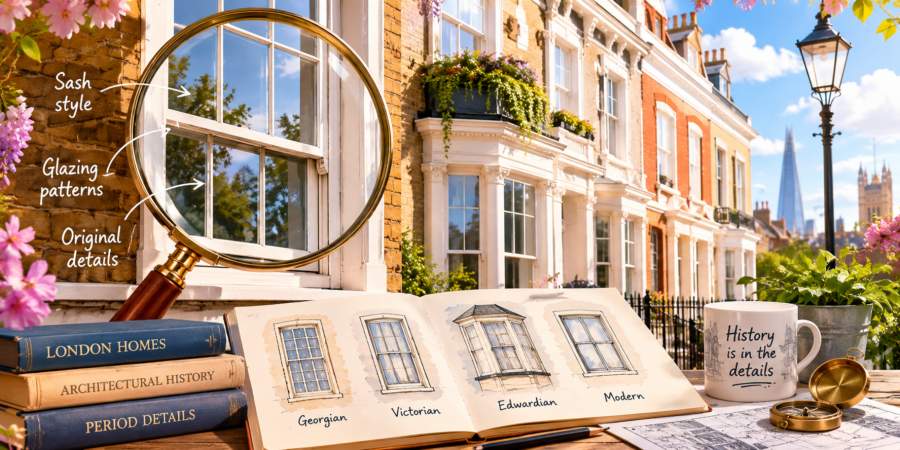
Sash windows are among the clearest signs of an older London home. They became especially common from the Georgian period onwards, and their proportions often give away more than people expect. Tall, elegant sash windows with multiple small panes usually suggest an earlier property, especially where the glazing bars are slim and the openings are carefully balanced. These windows were not just about daylight. They were about order, symmetry, and showing the neighbours that one’s house had manners.In many Georgian homes, the classic six-over-six sash window is a strong clue. That means six panes in the upper sash and six in the lower sash. Later, as glass manufacturing improved and larger panes became easier to produce, Victorian homes often moved towards fewer, bigger panes. A two-over-two sash can therefore hint at a later nineteenth-century property, although London houses love exceptions almost as much as they love narrow staircases.
Glass Size and the March of Technology
Window glass can be a quiet historical record. Small panes usually point to a time when large sheets of glass were difficult and expensive to make. If a home has many tiny panes, it may indicate an older design or a later attempt to imitate one. Larger panes became more common as manufacturing advanced, changing the look of residential streets across London.Original older glass may also have slight waviness or distortion. Look through it from an angle and the view may wobble gently, as if the garden fence has had a long lunch. This unevenness can be a sign of historic glass rather than a defect. Modern glass is generally flatter, cleaner, and more consistent, which is excellent for insulation but less useful if you enjoy feeling faintly haunted while looking at a lamppost.
Frame Proportions Tell Their Own Story
The size and shape of window frames can help identify the period of a London property. Georgian homes usually favour disciplined symmetry, with windows arranged in neat rows and decreasing in size on higher floors. Victorian homes often became more expressive, with bay windows, decorative surrounds, and larger openings designed to bring more light into front rooms.Edwardian properties frequently continued the love of light but softened the overall style. Wider windows, simpler detailing, and practical layouts became more common. By studying the rhythm of the windows across the front elevation, homeowners can often spot whether a house is largely original or has been altered over time. Sometimes the evidence is subtle. Sometimes it is a plastic window wedged into a period façade with all the sensitivity of a shopping trolley in a ballroom.
Construction Details Hidden in Plain Sight
Window openings often reveal information that goes beyond the windows themselves. The brick arches above them, the depth of the reveals, and the materials used around the frame can all provide valuable clues. Older London properties frequently feature carefully crafted brickwork designed to support the opening while adding decorative character. Victorian builders in particular seemed determined to prove that even a window could receive an impressive amount of architectural attention.Examining the junction between the frame and surrounding wall can also tell a story. Original windows tend to fit naturally within the structure because they were designed alongside the building itself. Later replacements may leave subtle signs, such as altered brickwork, unusual trim, or evidence that the opening has been resized. These details are not necessarily problems, but they can indicate that the property has undergone significant changes during its lifetime.
In some cases, blocked-up windows provide especially interesting evidence. London’s long history of redevelopment means many houses have been altered repeatedly. A faint outline in brickwork may suggest an earlier opening that was closed decades ago. Such discoveries can feel a little like finding a forgotten chapter in the property’s biography.
Bay Windows and What They Reveal
Bay windows became particularly popular during the Victorian and Edwardian periods. Beyond creating a striking appearance, they increased natural light and gave occupants a better view of the street. For many homeowners, a bay window is simply an attractive feature. For anyone interested in architectural history, it is often a useful dating tool.Different bay designs can point towards different eras. Elaborate decorative bays with ornate detailing often suggest Victorian influences, while Edwardian examples frequently appear lighter and slightly less formal. Of course, London’s builders rarely agreed on everything, which means exceptions can be found on almost every street.
When examining a bay window, it is worth looking at whether the materials and proportions appear consistent with the rest of the property. An original bay usually feels integrated into the overall design. Later additions can sometimes stand out, though occasionally only after a very careful inspection and perhaps several cups of tea.
Why These Clues Matter Today
Understanding a property’s windows is about more than satisfying curiosity. Buyers can gain a better understanding of a home’s development over time. Renovators can make more informed decisions about repairs and upgrades. Owners of period properties can identify features worth preserving before embarking on major projects.These observations can also help when researching local history. A house that appears Victorian at first glance may contain much older elements. Equally, a property that looks entirely original may have undergone substantial alterations across several generations. Windows often provide one of the clearest starting points for uncovering those changes.
A Clear Pane of Evidence
Few parts of a London home reveal as much history as its windows. Sash styles, glazing patterns, frame proportions, bay designs, and construction details all offer clues about when a property was built and how it has evolved. While official records and historical documents remain valuable resources, a careful look at the windows can often provide surprisingly accurate hints about a building’s past.Every frame, pane, and opening contributes another piece of the story. For homeowners willing to pay attention, those details transform ordinary windows into historical evidence, quietly recording decades—and sometimes centuries—of architectural change across London’s streets.