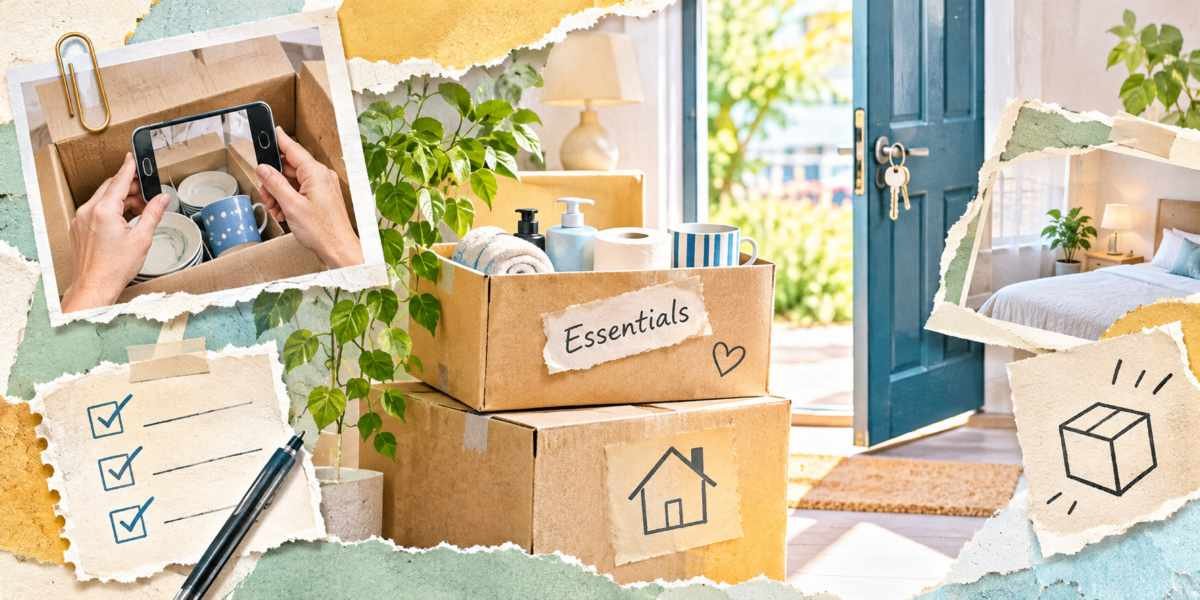
Most people approach packing with a single objective: getting everything out of their current property. Relatively little thought goes into what happens at the other end. By treating unpacking as the primary objective, households can significantly reduce the disruption, exhaustion and domestic disagreements that accompany moving day.
Work Backwards from Your First Morning
Imagine waking up in your new home. What will you need within the first thirty minutes? Consider everything from toiletries and clean clothes to medication, breakfast supplies and phone chargers. These belongings should be packed separately from the rest of your household contents.Ideally, each family member should have a personal bag containing enough essentials for forty-eight hours. A separate household essentials box should contain basic kitchen utensils, cleaning products, toilet paper and anything necessary for preparing simple meals.
Moving house should not require adopting the survival techniques of a nineteenth-century Arctic expedition. A little preparation can preserve a surprising amount of everyday comfort.
Pack for Where Things Are Going
Labelling boxes according to their current location seems logical until you realise that your new property has an entirely different layout. Perhaps your existing dining room doubles as an office, while your new home has a dedicated workspace. Packing everything from the dining room together simply creates another sorting exercise upon arrival.Before packing, establish where your belongings will live in the new property. Assign each room a colour or identifying letter and label boxes accordingly. Removable signs on the doors of your new home can help removal teams identify the correct destinations without repeatedly asking for directions.
This approach also provides an opportunity to assess whether certain possessions actually have a place in your new home. Discovering that your enormous bookcase has nowhere to go is considerably less expensive before transporting it across the country. Cardboard boxes should facilitate decisions, not postpone them.
Let Your Camera Do the Remembering
Taking photographs of the contents of each box before sealing it can save considerable time during unpacking. Number your boxes and create a corresponding photo album on your phone. When you need something specific, you can browse the photographs rather than perform exploratory surgery on seventeen cardboard containers.Photographs are particularly useful when dismantling furniture or disconnecting electronic equipment. Capturing the arrangement of cables behind a television or computer takes seconds but could prevent an entire evening of troubleshooting, increasingly inventive swearing and accusations directed at innocent electrical equipment.
A photographic inventory can also provide a useful record of the condition of valuable possessions before transportation, particularly if you need to make an insurance claim.
Last into the Van, First into the House
Loading a removal vehicle requires more consideration than simply filling the available space. Discuss your unpacking priorities with your removal team beforehand, allowing them to plan a loading sequence that accommodates your needs without compromising the safety or stability of the load.Bedding, essential kitchen equipment and frequently used household items should be readily accessible upon arrival. Furniture that requires assembly should ideally be unloaded before the boxes intended to fill it. There is little benefit in having immediate access to your entire wardrobe if the wardrobe itself is still wedged behind a refrigerator.
Unpacking Without Unravelling
Resist the temptation to open every box immediately. Establish functional living spaces first, concentrating on bedrooms, bathrooms and the kitchen. Once these areas are operational, the remaining unpacking can proceed at a manageable pace without interfering with everyday life.Set realistic targets over the following days and designate an area for empty boxes and discarded packaging. Maintaining clear walkways is particularly important for households with young children, pets or elderly relatives.
Ultimately, a successful house move should be measured not by how quickly you empty your old property but by how comfortably you begin living in your new one. Packing with that objective in mind transforms the entire process. After all, you’ve paid to move into a new home, not to spend your first fortnight living inside a cardboard distribution centre.
Article kindly provided by mariovans.co.uk