Slow drains are usually caused by a gradual build-up of soap residue, grease, food particles, or hair. These materials cling to pipe walls and narrow the passage over time. The good news is that mild obstructions near the surface can often be loosened without dismantling half the kitchen or resorting to industrial-strength solutions.
Understanding What You’re Dealing With
Before reaching for baking soda or vinegar, it helps to assess the situation calmly. Is the water draining slowly but steadily? That’s typically a soft build-up. Is it completely stagnant? That suggests a more solid blockage or something lodged further down the pipe.For minor slow drains, DIY methods can be effective because they break down residue rather than dislodge large objects. However, if multiple fixtures are backing up — for example, the sink and the shower at the same time — the issue may lie deeper in the system. That’s when restraint becomes a virtue.
Hot Water First Always
It sounds almost too simple, but hot water is often the best starting point. Grease and soap scum respond well to heat. Boil a kettle, let it sit for a minute (pouring aggressively boiling water into certain pipes can cause stress, particularly older PVC), then pour it steadily down the drain.This works particularly well in kitchen sinks where fats are the main culprit. Repeating the process two or three times can melt away soft accumulations. It’s not dramatic. It doesn’t fizz. But it’s frequently effective.
Baking Soda and Vinegar Done Properly
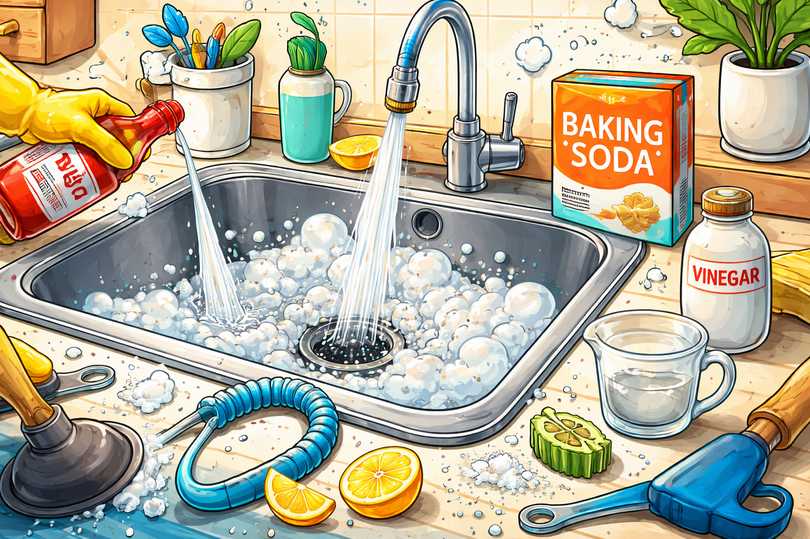
The classic combination has earned its place in household folklore, but it’s often misused. The goal isn’t to create a science fair volcano. The aim is to generate a mild reaction that helps loosen debris clinging to pipe walls.Use it this way:
- Pour about half a cup of baking soda into the dry drain.
- Follow with roughly the same amount of white vinegar.
- Cover the drain opening to keep the reaction contained.
- Wait 15 to 30 minutes before flushing with hot water.
There’s also a safety note worth taking seriously. Never mix these ingredients if you’ve previously used commercial chemical drain cleaners. Combining substances without knowing what’s already in the pipe can produce harmful fumes or unwanted reactions. If a strong chemical cleaner has gone down recently, skip the kitchen chemistry and ventilate the area.
Salt and Hot Water for Greasy Residue
For kitchen drains prone to oil build-up, a simple salt treatment can help. Pour half a cup of table salt into the drain, then follow with hot water. The abrasive texture of salt can help scrub minor residue while the heat softens grease.This method isn’t glamorous, but neither is dismantling pipework on a Sunday evening. Simple often wins.
More stubborn issues require a different mindset. If water refuses to budge or unpleasant odours persist despite careful attempts, the blockage may sit further down the line. Repeatedly pouring mixtures into a pipe in frustration rarely improves matters. It can, however, complicate professional repair if stronger measures become necessary.
When DIY stops being sensible and starts becoming stubborn, it’s time to pause. Persistent blockages, recurring slow drainage, or gurgling sounds may indicate deeper structural problems or significant obstructions. In those cases, proper inspection and equipment are more effective than another hopeful scoop of baking soda.
Hair Today Gone Tomorrow
Bathroom sinks and showers face a different enemy. Hair binds with soap residue to form surprisingly resilient clumps. No amount of fizz will magically persuade that knot to dissolve. In these cases, mechanical removal works better than culinary experiments.A simple plastic drain snake or flexible cleaning tool can hook out debris sitting just below the plughole. It’s not a glamorous task. It may test your appreciation for what goes down the drain unnoticed. But it is highly effective and avoids unnecessary chemicals.
For ongoing prevention, consider using a drain cover that catches hair before it enters the pipe. It’s a small intervention that prevents larger inconveniences. Maintenance rarely feels urgent until it is.
What Not to Pour Down the Drain
Some online advice suggests combinations that are less helpful than they appear. Mixing multiple cleaning agents can create dangerous reactions. Caustic chemical cleaners, when used repeatedly, can weaken pipes and seals, especially in older plumbing systems.Avoid these common missteps:
- Combining commercial drain cleaners with vinegar or other acids.
- Pouring boiling water directly into fragile or cracked pipes.
- Using excessive force with plungers on lightly fitted fixtures.
- Ignoring repeated slow drainage and assuming it will resolve itself.
When to Step Away from the Sink
Certain warning signs suggest the issue extends beyond a simple surface blockage. If water backs up into other fixtures, if foul smells intensify, or if outdoor drains are overflowing, the problem may lie deeper in the system. Structural issues, tree root intrusion, or collapsed pipe sections are not solvable with pantry ingredients.Repeated DIY attempts can sometimes compact a blockage further down the line. That makes eventual removal more complex. Recognising the limits of home remedies is not defeat; it’s practical judgement.
Professional tools such as high-pressure water jetting or camera inspections exist for a reason. They address problems without guesswork. Sometimes the most cost-effective choice is early intervention rather than prolonged experimentation.
Keeping Things Flowing Smoothly
Prevention is less dramatic than repair but far more satisfying. Small habits make a significant difference. Scrape plates before washing. Allow cooking oil to cool and dispose of it in a sealed container rather than down the sink. Run hot water briefly after using the kitchen sink to discourage grease from settling.In bathrooms, remove visible hair regularly and clean plug assemblies every few weeks. It takes minutes and avoids hours of inconvenience later.
Minor blockages respond well to thoughtful, measured action. Hot water, baking soda, vinegar, and salt all have their place when used correctly and sparingly. They are tools, not miracles. Used wisely, they can restore flow without harming pipes or creating new problems.
Let That Sink In
Drains rarely demand attention when everything is working. They perform quietly and without praise. When they falter, it’s usually because small deposits were allowed to accumulate over time. Addressing those early with sensible methods keeps minor inconveniences from becoming expensive repairs.A measured approach beats dramatic gestures every time. A kettle, a half cup of baking soda, a little patience, and a willingness to stop when necessary often prove more powerful than anything lurking beneath the sink in a brightly labelled bottle.
Article kindly provided by drainage-plumbing.co.uk