Spills are not rare accidents; they are part of domestic life. What separates a minor inconvenience from a permanent stain is response time and technique. Emergency spill triage is about acting quickly, calmly, and correctly. Panic rarely improves outcomes, especially when armed with a scrubbing brush and misplaced confidence.
The first rule is simple and serious: blot, do not scrub. Scrubbing pushes liquid deeper into fibres, spreads the stain outward, and damages the carpet structure. Blotting absorbs. Use clean white cloths or paper towels, apply firm pressure, and work from the outer edge toward the centre. This prevents the spill from expanding its territory like an ambitious empire.
Speed matters. The longer a liquid sits, the more opportunity it has to bond with fibres and backing. Immediate action limits that bonding process and significantly reduces long-term discolouration.
Living Room Incidents and Beverage Disasters
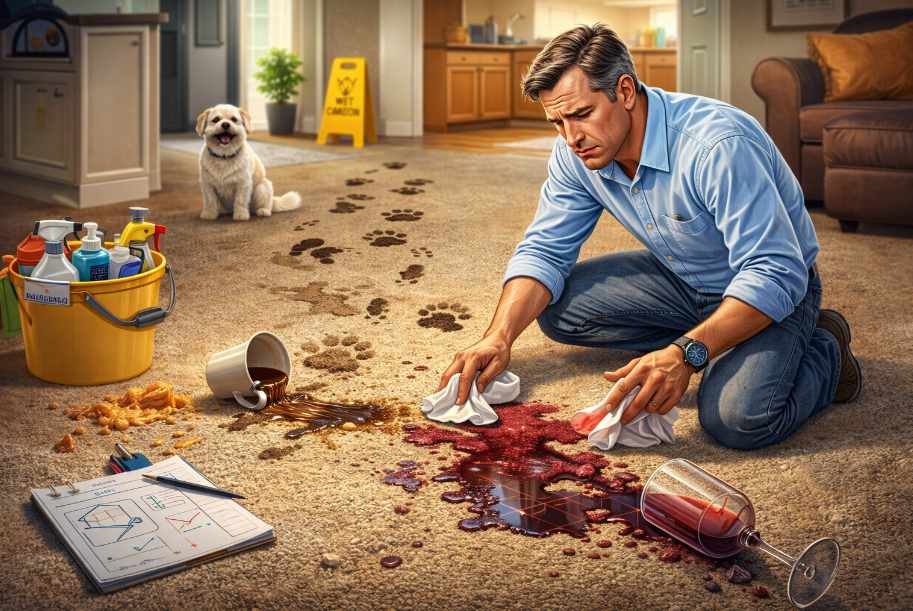
The living room is often ground zero for drink-related mishaps. Coffee, tea, soft drinks, and red wine each present unique challenges.For coffee and tea, begin by blotting thoroughly to remove as much liquid as possible. Follow with a mild solution of warm water and a small amount of gentle dishwashing liquid. Dampen a cloth with the solution and continue blotting. Avoid soaking the carpet; excessive moisture can seep into the underlay and create lingering odours.
Red wine demands swift action. After blotting, apply cold water sparingly to dilute the stain, then blot again. A small amount of diluted white vinegar can assist in neutralising colour pigments. Continue alternating between light application and blotting until improvement is visible. Resist the urge to pour half the bottle of vinegar onto the carpet. Carpets appreciate moderation.
Soft drinks often contain sugars that leave sticky residues. Once the colour has been reduced, rinse lightly with clean water and blot dry. Residue left behind attracts dirt, meaning today’s spill becomes tomorrow’s dark patch.
Hallways, Mud, and Outdoor Contaminants
Hallways endure daily exposure to the outside world. Muddy shoes, wet umbrellas, and the occasional adventurous child introduce soil and moisture.Allow mud to dry before attempting removal. Wet mud spreads easily and penetrates deeper into fibres. Once dry, gently scrape off solid material with a blunt edge and vacuum thoroughly. Only then should you address any remaining staining with a mild cleaning solution and blotting technique.
This approach may test patience, especially when footprints resemble an abstract art installation across the hallway. However, drying first prevents further fibre distortion and staining.
Preventative measures also deserve attention. Entry mats, shoe racks, and a simple household rule about footwear significantly reduce recurring issues. Carpets are durable, but they were not designed to host the entire garden.
Bedrooms and Pet Related Accidents
Pet accidents require both stain and odour management. Begin by absorbing as much liquid as possible with paper towels or cloths. Apply gentle pressure to draw moisture upward rather than pushing it down.After blotting, use a solution of water and white vinegar in equal parts to neutralise odours. Blot again until the area is nearly dry. Enzyme-based cleaners specifically formulated for pet stains are particularly effective because they break down organic matter at a molecular level. This step is important. Masking odours without addressing the source invites repeat performances from pets who consider scent a helpful navigation tool.
Excessive moisture should be avoided. Over-wetting can spread the affected area beneath the surface, complicating removal and potentially damaging the carpet backing.
Serious cases involving large areas or repeated incidents may require professional deep extraction. When odours persist despite careful treatment, specialised equipment can remove contaminants embedded beyond the reach of household tools.
Kitchen Spills and Grease Challenges
Kitchens introduce a different category of spill altogether. Oils, sauces, and food-based splashes contain fats that cling stubbornly to fibres. Unlike simple water-based drinks, grease requires a targeted response.Begin by blotting any excess liquid or residue. For oily spots, apply a small amount of dishwashing liquid diluted in warm water. Dishwashing liquids are designed to cut through grease, making them suitable in moderation for carpet emergencies. Lightly dab the area with a cloth dipped in the solution, then blot repeatedly with a clean towel to lift the residue.
Resist the instinct to attack the stain with multiple household products at once. Mixing chemicals can cause discolouration or leave residues that attract dirt. More product does not equal more effectiveness. Precision outperforms enthusiasm.
If a greasy stain persists after careful treatment, professional cleaning may be necessary. Extraction equipment can remove residues embedded deep within the pile, restoring both appearance and texture.
When to Escalate Beyond DIY
Not every spill can be resolved with household supplies. Certain warning signs indicate that deeper intervention is warranted.- Stains that reappear after drying
- Persistent odours despite surface cleaning
- Large saturated areas from flooding or appliance leaks
- Discolouration spreading beneath the visible stain
Water damage requires immediate attention. Extended dampness can weaken adhesives, distort fibres, and encourage microbial growth. In these situations, speed is critical. Industrial drying and extraction equipment can prevent long-term structural damage.
Treating serious incidents promptly preserves the carpet’s integrity and avoids costly replacement.
Staying Calm Under Pressure
Emergency spill triage is less about perfection and more about control. A composed, methodical approach consistently outperforms frantic scrubbing and guesswork.Keep a small spill kit accessible in high-risk areas. White cloths, paper towels, mild detergent, white vinegar, and an enzyme cleaner cover most common scenarios. Having supplies ready reduces delay and limits damage.
It also helps to accept that carpets are designed for living. They will endure footsteps, pets, and the occasional dramatic glass of red wine. The goal is not flawless preservation but intelligent response.
No Use Crying Over Spilled Milk
Every home experiences its share of accidents. What defines the outcome is preparation and technique. Blotting instead of scrubbing, applying appropriate solutions, allowing mud to dry, and recognising when professional support is needed can extend carpet life significantly.Swift, informed action prevents small mishaps from becoming permanent reminders. With a clear response plan in place, even the most determined spill loses much of its power.
Article kindly provided by a1carpetcleaning.au