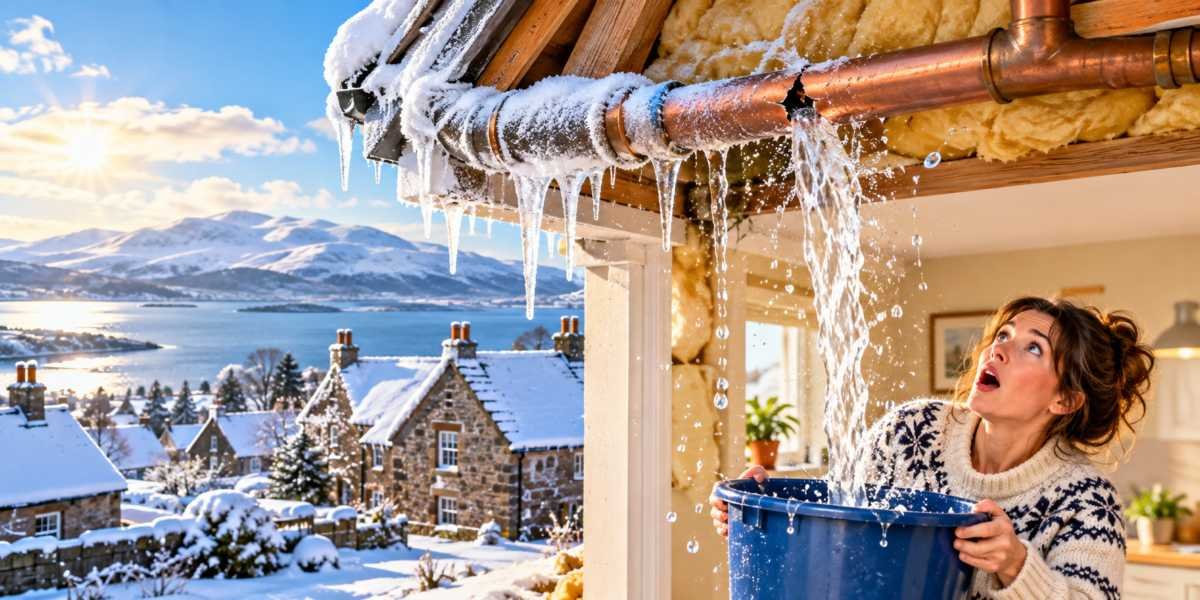
This peculiar timing is no coincidence. Frozen pipes frequently reveal their damage during a thaw rather than at the coldest point of winter. Understanding why this happens can help Scottish homeowners prevent expensive repairs and recognise trouble before an innocent-looking damp patch becomes an indoor waterfall.
Why Warmer Weather Can Bring Worse News
Water expands by approximately nine per cent when it freezes. Inside a confined pipe, expanding ice can generate enormous pressure, particularly when an ice blockage traps liquid water between itself and a closed tap or valve. Eventually, the pipe may split, a joint may fail, or an already weakened section may develop a fracture.However, the resulting damage is not always immediately obvious. Ice can temporarily obstruct the opening, preventing water from escaping. Once temperatures rise and the frozen section melts, normal water pressure returns and the hidden fracture begins leaking.
The thaw has not necessarily caused the original break. It has simply exposed the damage inflicted during freezing conditions. Unfortunately, household insurance companies rarely accept the argument that the weather was technically improving when the sitting room became a paddling pool.
Scotland’s Unpredictable Winter Temperatures
Scottish winters are particularly troublesome because temperatures frequently fluctuate around freezing point. A property might experience several nights below zero, followed by milder Atlantic air, rain and another sudden cold spell.These repeated changes expose vulnerable plumbing to successive freezing and thawing cycles. Pipes that survive one episode may already have suffered stress, while deteriorating fittings and poorly supported connections can become increasingly susceptible to failure.
Older Scottish properties present additional complications. Traditional stone buildings, converted tenements and rural cottages may contain pipework installed long before modern insulation standards became commonplace. Even relatively recent extensions can have vulnerable plumbing where insulation is inadequate or cold air enters concealed spaces.
Where Frozen Pipes Prefer to Hide
Certain parts of a property are considerably more vulnerable than others. Unheated lofts are obvious candidates, particularly where insulation beneath the pipes prevents warmth from rising from occupied rooms. Garages, outbuildings and poorly insulated extensions can experience temperatures approaching those outdoors.External walls also deserve attention, especially when pipes run through cavities or behind kitchen cupboards. A perfectly comfortable room can conceal a freezing pipe just centimetres away. Plumbing beside draughty air vents, beneath suspended floors or near poorly sealed openings faces similar risks.
The most troublesome locations are often those householders rarely inspect. A pipe hidden behind fitted furniture can quietly freeze while the central heating maintains a reassuring twenty degrees elsewhere. Unfortunately, the pipe has not received the thermostat’s memo.
Recognising a Frozen Pipe Before Disaster Strikes
A sudden reduction in water pressure during freezing weather can indicate an ice blockage. If one tap produces only a trickle while others operate normally, the affected supply pipe may have frozen. Complete loss of water from a particular outlet is another warning sign.Visible frost on exposed pipework provides an obvious clue, although frozen sections are frequently concealed. Unusual bulges, distorted fittings or unexplained dampness should raise immediate concern. Occasionally, a pipe may produce strange noises as water attempts to move through a restricted section.
Importantly, a frozen pipe does not automatically mean a burst pipe. Nevertheless, treating the situation seriously is essential because damage may become apparent only after the ice disappears.
Thawing Pipes Without Making Matters Worse
Before attempting to thaw a suspected frozen pipe, locate the property’s main water shut-off valve and check whether any visible sections have already split. If damage is suspected, turn off the water supply and arrange professional assistance.For an accessible, undamaged pipe, gentle warming may restore normal flow. A warm towel, a hot-water bottle wrapped in cloth or carefully applied warm air from a hairdryer can help, provided electrical equipment is kept well away from moisture. Open the affected tap slightly to relieve pressure and allow water to escape as the blockage melts.
Never use a blowtorch, naked flame or boiling water. These methods can damage pipework, create fire hazards and turn a manageable inconvenience into something requiring both a plumber and an extremely awkward conversation with the insurance company.
Concealed or inaccessible frozen pipes are best left to a qualified professional.
Finding Leaks After the Ice Has Melted
Once water flow returns, inspect vulnerable areas carefully. Look for fresh stains on ceilings, damp skirting boards, swollen flooring and moisture beneath sinks or around exposed joints. A persistent hissing sound may indicate escaping water.If the property has a water meter, checking whether it continues registering consumption when every outlet is closed can help identify a hidden leak. However, not every Scottish home has a meter, and small leaks may require professional detection equipment.
If leakage is discovered, shut off the main supply immediately. Where water approaches electrical fittings, avoid touching affected equipment and seek appropriate assistance. Photographing damage can also support subsequent insurance claims.
A Little Insulation Saves a Flood of Trouble
Prevention begins with properly insulating exposed pipes using suitable pipe lagging. Cold lofts, garages and external-wall cavities deserve particular attention. Sealing unwanted draughts and maintaining appropriate background heating during severe frost can also reduce freezing risks.Outdoor taps should be isolated and drained where possible. Homeowners leaving properties unoccupied during winter should consider suitable frost protection arrangements rather than assuming a closed front door will somehow discourage the weather.
Scotland’s winter plumbing problems often arrive precisely when the forecast looks more encouraging. The real danger is assuming that rising temperatures mean the threat has passed. A little preparation, careful observation and prompt action can ensure the only thing flowing freely after a Scottish thaw is the conversation about how dreadful the weather has been.
Article kindly provided by safeplumbersglasgow.com