Our responses to animal imagery are shaped by experience, cultural associations and the visual signals animals appear to communicate. Understanding these influences can help homeowners choose artwork that creates the atmosphere they actually want, rather than accidentally turning their bedroom into a wildlife documentary’s most dangerous episode.
Why Animal Expressions Matter
Humans are remarkably sensitive to facial expressions, even when the face belongs to another species. A relaxed dog with half-closed eyes may suggest contentment, while a wolf displaying its teeth communicates something considerably less reassuring.Interestingly, our interpretations are not always accurate reflections of animal behaviour. What appears to be a smile on one creature might serve an entirely different biological purpose. Nevertheless, the emotional impression remains important when selecting decorative artwork.
Portraits featuring relaxed facial muscles, gentle expressions and natural resting positions often feel less confrontational than images showing aggression or heightened alertness. This makes them particularly suitable for bedrooms, reading corners and other spaces associated with relaxation.
The Unexpected Power of Eye Contact
A portrait featuring an animal looking directly towards the viewer can create a surprisingly powerful sense of engagement. Direct eye contact naturally attracts human attention, making the subject feel present rather than merely decorative.Consider a large painting of an owl staring straight ahead. Its enormous eyes might create an intriguing focal point, although positioning it opposite the bed could leave visitors wondering whether they are being assessed for suitability as breakfast.
Animals looking away from the viewer generally create a different impression. A horse gazing across an open field or a fox watching the distant horizon invites the observer to follow its attention into the surrounding landscape.
This outward-looking composition can make artwork feel more contemplative. Rather than demanding interaction, the animal becomes part of a wider scene, encouraging the viewer to appreciate the environment.
Body Language Changes Everything
An animal’s posture can communicate as much as its expression. Curled-up cats, resting horses and birds perched comfortably on branches suggest stillness and security. By contrast, a tiger preparing to leap or an eagle diving towards its prey introduces movement and tension.Neither approach is inherently better. Dynamic imagery can energise a hallway, home office or creative workspace, while quieter compositions may complement areas intended for rest.
The important distinction is between visual excitement and visual comfort. A charging rhinoceros might be magnificent artwork, but it is unlikely to persuade anyone that the downstairs bathroom is a sanctuary of peace.
Colour Can Make a Predator Look Peaceful
Colour plays an important role in determining whether animal artwork feels soothing or stimulating. A wolf portrayed against a misty blue woodland may appear mysterious and contemplative, while the same animal surrounded by fiery reds and dramatic shadows can seem considerably more threatening.Muted greens, soft blues, earthy browns and gentle greys often complement relaxing interiors. These colours are frequently associated with natural environments, helping animal portraits blend into rooms designed around comfort and simplicity.
However, bright colours need not produce an aggressive atmosphere. A colourful parrot resting among tropical leaves can feel cheerful and welcoming, particularly when surrounded by neutral furnishings. The secret lies in balancing colour intensity with the animal’s expression, posture and surroundings.
Even a crocodile might look relatively harmless in pastel colours, although hanging one above a baby’s cot remains an adventurous decorating decision.
Why Backgrounds Deserve More Attention
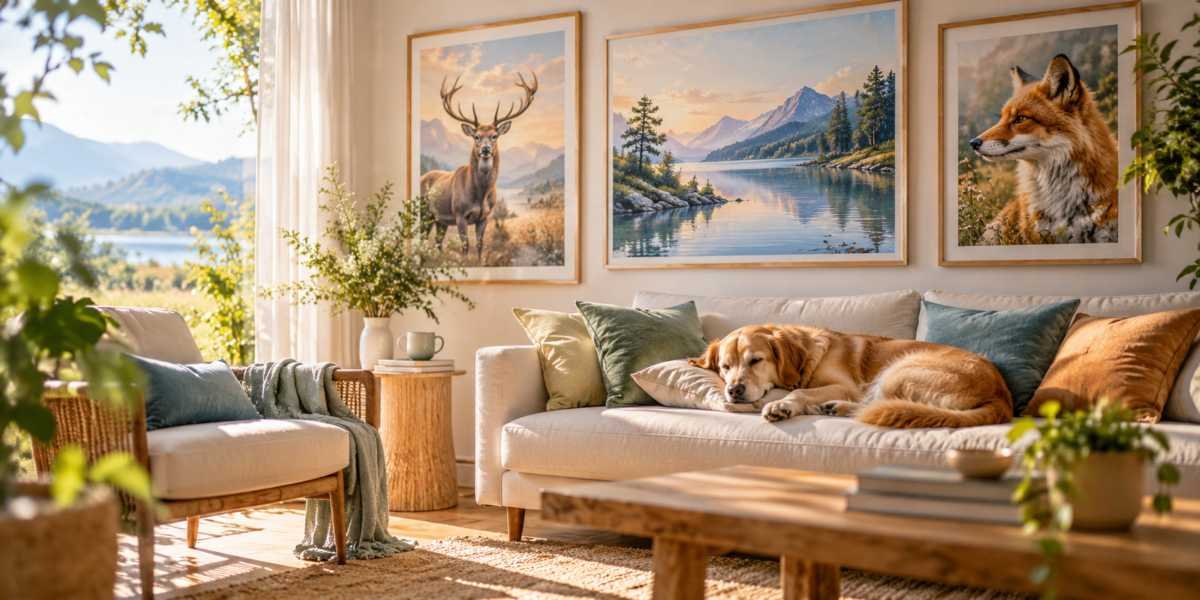
The setting surrounding an animal can dramatically alter the emotional character of a portrait. A solitary deer standing in an empty forest clearing communicates something different from a deer surrounded by dense vegetation and looming shadows.Open landscapes, distant horizons and uncluttered backgrounds often create a sense of spaciousness. They allow the viewer’s attention to move beyond the animal rather than concentrating entirely on its presence.
For smaller rooms, wildlife portraits incorporating open skies, quiet lakes or distant mountains can introduce an impression of depth. Images with crowded compositions and intense contrasts may work better in larger spaces where they have sufficient visual breathing room.
Matching Animals to Different Rooms
Choosing animal artwork becomes easier when considering the purpose of each room. Bedrooms generally benefit from restful compositions, such as sleeping foxes, grazing horses or birds resting beside water.Living rooms offer greater flexibility. A majestic lion, elegant stag or colourful tropical bird can provide an engaging focal point without overwhelming the surrounding furniture. Home offices may benefit from imagery suggesting curiosity, movement or alertness, particularly when a little visual energy is welcome.
Scale matters too. An enormous close-up portrait of a gorilla can dominate a narrow hallway, while a smaller illustration featuring the same animal might feel charming and understated. Consider viewing distance, available wall space and the existing decorative scheme before choosing a piece.
Personal associations should also influence the decision. Someone with fond memories of horses may find equestrian artwork reassuring, while another person might associate the same imagery with an unfortunate childhood riding lesson.
A Room with a Different Kind of Roar
Animal portraits offer more than attractive decoration. Their expressions, postures, colours and surroundings can influence whether a room feels peaceful, playful, dramatic or energetic. These effects are subjective, but thoughtful selection can help create a more coherent atmosphere.Ultimately, the most successful animal artwork balances visual appeal with the emotional character of its surroundings. A resting lion can communicate quiet confidence, while a playful kitten introduces warmth and familiarity. Neither requires an interior designer to explain its presence.
And if a portrait of a snarling tiger genuinely helps someone relax after a difficult day, perhaps the most important decorating principle is simply knowing which animals make you feel at home.
Article kindly provided by moriahs.com