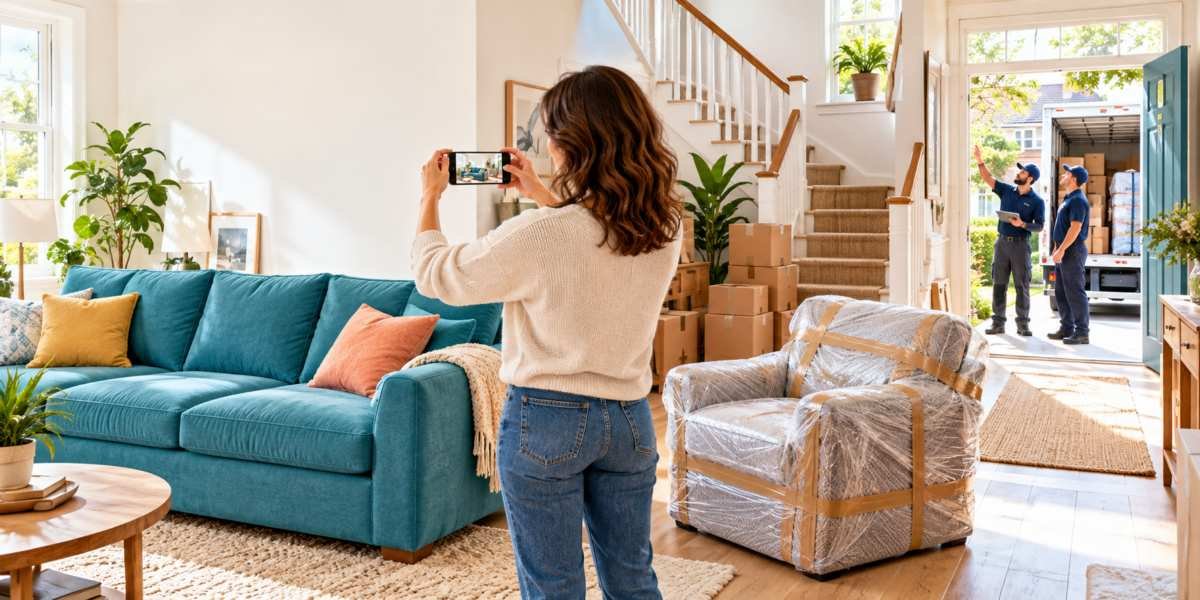
A Picture Shows What “Large” Actually Means
A moving list can make a home sound remarkably straightforward. “Three-seater sofa” occupies three harmless words. A photograph may reveal that it is a deep, reclining monster with a chaise end, built-in cup holders and the determined expression of something that has no intention of fitting through a normal doorway.That is why images often lead to a more accurate moving quote. They give a removals company the context that a list cannot: scale, shape, quantity and the practical route between an item and the vehicle. A written inventory is still useful, particularly for counting boxes and smaller belongings, but photographs help turn broad descriptions into a realistic plan.
Consider a wardrobe. On paper, it is simply “one wardrobe”. In reality, it may be a flat-pack unit that comes apart in twenty minutes, or a solid oak family heirloom that has remained in the same bedroom since the curtains had floral pelmets. A clear image lets the mover judge its likely weight, whether dismantling is sensible and how many people may be needed to handle it safely.
Photos also reveal clusters of possessions that people understandably forget to count. Garden furniture, garage shelving, gym equipment, attic boxes and the contents of a shed have a habit of expanding when viewed in daylight. That is not a personal failing. It is what happens when a household quietly accumulates bicycles, spare tiles, old paint tins and a mysteriously large number of extension leads.
Access Is Half the Job
The object being moved matters, but so does the journey it must take. A photograph of the front of the property can show a narrow road, limited parking, steep drive, permit restrictions or an entrance that requires a vehicle to stop some distance away. Those details affect time, staffing and sometimes the size of van required.Indoor access deserves equal attention. Staircases, lifts, tight corners and long corridors can turn an ordinary move into a careful piece of furniture choreography. A sofa that fits easily into a ground-floor lounge may need to be carried down several flights of stairs, around a bend and through a communal door designed by somebody who had clearly never owned a sofa.
When requesting a quote, useful photographs usually include:
- Wide shots of each room, including cupboards and storage areas.
- Close images of bulky, fragile or unusually shaped items.
- The main entrance, driveway, stairs, lift and difficult corners.
- Outdoor spaces, garages, sheds and any separate collection point.
Photograph the Difficult Things, Not Just the Obvious Ones
Nobody needs six artistic angles of a bedside lamp. The useful images are the ones that prevent surprises on moving day. Take photographs of anything that is unusually heavy, delicate, valuable, oversized or fixed in an awkward position. Pianos, large aquariums, safes, marble tables, exercise machines, mirrors, statues and American-style fridge freezers should all receive their moment in front of the camera.It is also sensible to photograph items that may need specialist handling or disconnection. This can include washing machines, tumble dryers, freestanding cookers, large televisions, wall-mounted screens and outdoor hot tubs. A moving team can then explain what they are able to do, what preparation is needed, and whether a qualified tradesperson should disconnect or reinstall something first.
Be honest about the less glamorous locations. A packed loft, a cellar with low headroom or a garden shed at the far end of a muddy path is still part of the move. Leaving it off the initial information does not make it disappear; it merely gives it the power to appear at 4.40pm while everyone is wondering where the final forty boxes came from.
There is no need to make the photographs perfect. Good lighting helps, but this is not an estate-agent brochure. Stand back far enough to show an item in relation to the room, then take a closer image if its size or condition matters. For very large objects, including something familiar beside them, such as a standard door or dining chair, can help communicate scale.
A Clearer Quote Starts Before the Van Arrives
A well-photographed move benefits both sides. The customer is more likely to receive a quote that reflects the actual work involved, rather than an attractive low figure that grows extra limbs once the removals team arrives. The company can allocate an appropriate vehicle, enough staff, suitable protective materials and sufficient time.This clarity can also make it easier to compare quotes. If every company has seen the same photographs and received the same inventory, the differences in their prices are more meaningful. It becomes easier to ask practical questions about packing, dismantling, insurance, storage, waiting time and access charges, rather than discovering assumptions after a date has been booked.
Photographs do not replace communication. Mention recent changes, uncertain items and anything that cannot be seen clearly. If a lift is unreliable, if access is only possible at certain times, or if a wardrobe must be taken apart before it can leave the room, say so. A short note alongside the images can prevent a surprisingly long conversation later.
Sending a thoughtful set of photographs is not about making a move sound more complicated than it is. It is about giving the people doing the lifting a truthful preview. That usually produces a more dependable quote, a calmer moving day and far less chance of hearing the sentence nobody wants to hear: “We didn’t realise that was coming too.”
Picture This Move Going Smoothly
A detailed inventory tells a mover what you believe you own. Photographs show how those belongings live in the real world: up stairs, behind gates, inside sheds and occasionally beneath a mountain of items labelled “sort later”. That extra visual information helps turn a rough estimate into a practical plan.Article kindly provided by shiftitmanandvan.com