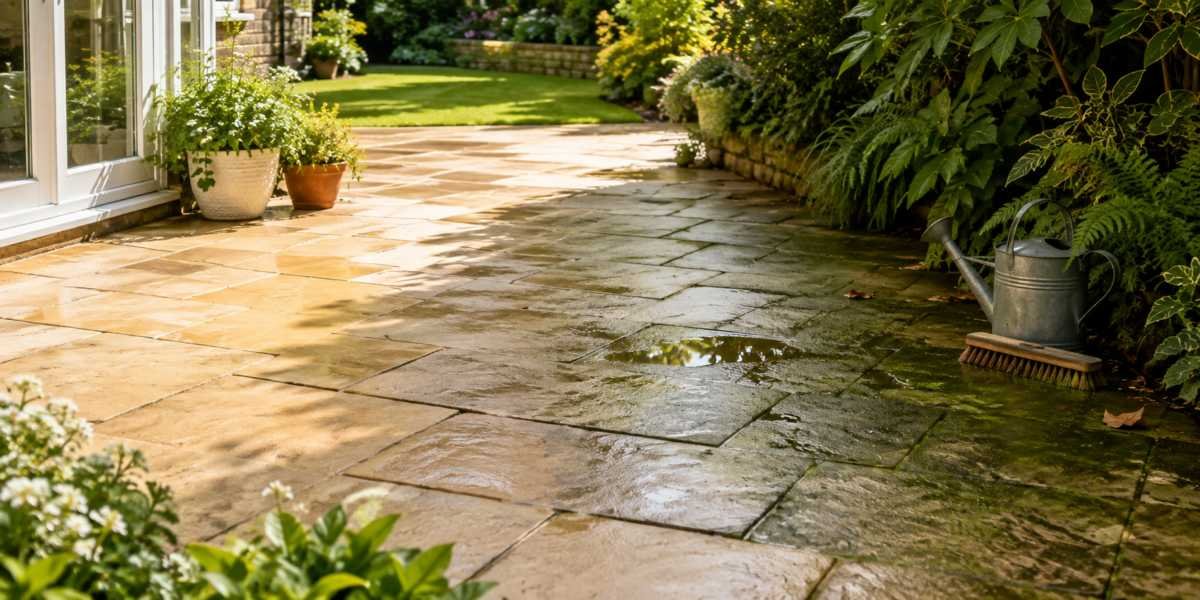
Algae is not a sign that a patio has been permanently ruined or scandalously neglected. It is a simple organism thriving wherever it finds moisture, limited sunlight and enough time to settle. Cleaning removes the visible growth, but unless those underlying conditions change, the algae is likely to return.
Why Damp Patios Stay Green
Moisture is the central ingredient. Patios that remain wet after rainfall provide algae with an ideal habitat, especially during mild weather. Water may linger because paving slabs are uneven, joints have sunk or the entire surface slopes towards the house rather than away from it.Nearby gutters and downpipes can also contribute. A leaking joint may drip onto the same section of paving every time it rains, while an overflowing water butt can keep the surrounding area permanently damp. Even an outdoor tap that dribbles occasionally may support a surprisingly ambitious green colony.
Poor drainage does not always produce an obvious puddle. Porous concrete, sandstone and older paving can hold moisture within the surface long after it appears dry. Algae growing inside tiny pores may then survive a quick clean and reappear when favourable conditions return.
Shade Gives Algae an Advantage
Sunlight helps outdoor surfaces dry, so shaded patios naturally remain damp for longer. North-facing areas, narrow side passages and paving beneath trees are particularly vulnerable. Fences, sheds, dense shrubs and garden furniture can create additional pockets of shade where air circulates poorly.Moving a large table occasionally can reveal a green silhouette beneath it, almost as if the patio has been keeping a detailed record of the furniture arrangements. Plant pots produce similar marks, particularly when saucers trap water underneath them.
Cutting back overhanging vegetation can improve both sunlight and airflow. Pots can be raised slightly on feet, while furniture may be repositioned periodically to let concealed areas dry. These small adjustments will not make algae extinct, but they can make the patio considerably less welcoming.
Cleaning Without Creating New Problems
Safety should come before appearance. Algae-covered paving can be extremely slippery, particularly when wet, so sturdy footwear is essential. Children and pets should be kept away while cleaning products are being used, and nearby plants may need protection from splashes.Begin by sweeping away leaves, soil and loose debris. This exposes the surface and prevents organic material from being spread around during washing. The best cleaning method then depends on the paving material, its condition and the severity of the growth. A stiff brush and warm water may be sufficient for light growth. Scrubbing requires more effort than pointing a powerful machine at the ground, but it gives greater control and is less likely to damage vulnerable joints. Work across a small area at a time, then rinse the loosened material away rather than allowing it to settle elsewhere.
Using a Pressure Washer Carefully
Pressure washing can remove stubborn algae quickly, but excessive force may strip material from paving joints, mark softer stone or damage a weathered surface. The nozzle should be kept at a sensible distance and tested on an inconspicuous area before the entire patio receives the full power of a minor aircraft engine.Use a broad spray rather than concentrating the jet on one point. Direct the water away from doors, air vents and neighbouring properties, and avoid blasting loose mortar. Any sand removed from block-paving joints will need to be replaced once the surface is completely dry.
Pressure washing deals with visible growth, but it does not correct persistent shade, standing water or leaking drainage. If those conditions remain, the clean patio may begin turning green again surprisingly quickly.
Choosing Cleaning Products Safely
Specialist patio treatments can help control embedded growth, although the instructions must be followed precisely. A stronger mixture is not automatically more effective and may discolour paving, harm plants or create dangerous runoff. Products should never be combined unless their manufacturers specifically state that this is safe.Bleach-based mixtures require particular care around lawns, borders, ponds and natural stone. Runoff must not enter surface-water drains. Before applying any treatment, check whether it is suitable for the particular paving material and test a small hidden section.
Allow the recommended contact time rather than scrubbing the product away immediately. Keep people and animals off the treated area until it has been thoroughly rinsed or has dried according to the instructions.
Making Regrowth Less Likely
Once the patio is clean, examine why it remained damp. Clear blocked channels, repair dripping gutters and fill depressions where water collects. Severely uneven or incorrectly sloped paving may require professional adjustment, particularly when water is being directed towards the building.Regular maintenance prevents a light film from becoming a miniature nature reserve. Sweep away wet leaves, remove accumulated soil from corners and brush the surface when the first green patches appear. Pay particular attention during autumn and winter, when reduced sunlight and frequent rain favour rapid growth.
Improving airflow can also help. Trim dense plants beside the paving and avoid packing furniture tightly against walls. Raising containers on pot feet allows water beneath them to drain and evaporate.
A Clean Slate Underfoot
A patio cannot be made permanently hostile to every trace of algae, especially in a damp climate. The practical goal is to slow its return by combining careful cleaning with better drainage, more airflow and routine sweeping.Treat recurring green patches as evidence rather than merely an eyesore. They reveal where water lingers and which areas receive too little sun. Address those conditions early, and the patio should remain cleaner, safer and considerably less interested in auditioning as an ice rink.
Article kindly provided by pureport.co.uk