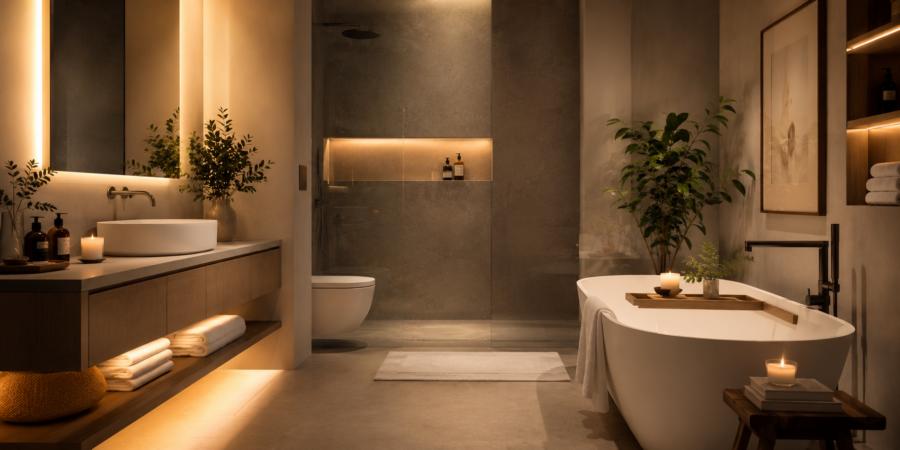
That difference rarely comes down to money alone. Hotels are experts at shaping atmosphere through small design decisions that quietly affect mood. The good news is that most of those tricks can work in ordinary homes without requiring a second mortgage or a marble bathtub large enough to dock a canoe.
Lighting That Doesn’t Feel Like an Interrogation Room
One of the biggest differences between hotel bathrooms and home bathrooms is lighting. Hotels understand that people generally prefer not to inspect their pores under the same brightness level used in supermarket car parks.Most homes rely on a single overhead light. It does the job, technically, but it often casts harsh shadows and makes the room feel flat. Hotels usually layer lighting instead. There may be wall lights beside the mirror, subtle ceiling lighting, and softer ambient light near the bath or vanity area.
Layered lighting changes the emotional temperature of a room almost instantly. Warm-toned bulbs create a calmer environment, while dimmable options let the space shift from practical to relaxing within seconds.
Simple upgrades can make a surprising difference:
- Replace cool white bulbs with warm white versions
- Install wall sconces beside mirrors instead of relying only on ceiling lights
- Add low-level lighting beneath cabinets or shelves
- Use dimmer switches where possible
Floating Furniture Creates Breathing Room
Hotel bathrooms often feel larger than they really are because designers avoid visually heavy furniture. Floating vanities and wall-mounted units expose more floor space, which makes the room appear cleaner and more open.In smaller home bathrooms, bulky cabinets can dominate the entire layout. A floating vanity gives the eye somewhere to travel. That sense of openness matters psychologically, even when the actual square footage remains unchanged.
There is also a practical advantage. Cleaning underneath wall-mounted furniture is far easier. Dust and stray hair have fewer places to form mysterious alliances in hidden corners.
Minimalism plays a role here too, although not the severe version where every surface resembles a futuristic dental clinic. Hotels carefully limit visual clutter. Countertops are usually clear except for essentials. Storage is concealed wherever possible.
At home, bathrooms slowly collect unrelated objects over time. Spare toothpaste, old skincare products, hotel freebies from 2017, and at least one drawer containing items nobody remembers buying. Reducing visible clutter immediately makes the space feel calmer.
Oversized Mirrors Quietly Change Everything
Large mirrors are one of the oldest tricks in interior design because they work. Hotels frequently install mirrors that stretch across entire walls or extend far beyond the width of the sink.A bigger mirror reflects more light and expands the visual depth of the room. Even compact bathrooms begin to feel brighter and less enclosed.
Frameless mirrors are especially effective because they blend into the room rather than interrupting it visually. That seamless appearance contributes to the calm, polished feeling many hotels aim for.
There is also a less discussed benefit. A generous mirror somehow convinces people they have their lives under control for at least seven minutes each morning. That illusion alone may justify the investment.
The placement matters just as much as the size. Hotels often position mirrors to reflect lighting or attractive textures rather than blank walls. A mirror bouncing warm light around the room creates softness that smaller mirrors simply cannot achieve.
Texture Balance Makes Rooms Feel More Expensive
Luxury rarely comes from one dramatic feature. More often, it comes from balance. Hotel bathrooms tend to combine materials carefully so the room feels layered without becoming chaotic.A common mistake in home bathrooms is using too many competing finishes. Glossy tiles, chrome fixtures, bright paint, patterned flooring, and heavy textures can overwhelm the senses when combined in a small space.
Hotels usually limit the visual noise. Designers may pair smooth stone with warm wood accents, matte finishes with soft fabrics, or polished surfaces with textured accessories. The contrast creates interest without demanding constant attention.
Textiles matter more than people think. Thick towels, simple bath mats, and quality shower curtains instantly affect how the room feels. Nobody steps out of a shower feeling particularly luxurious onto a towel that resembles folded cardboard.
Texture also influences acoustics. Softer materials absorb sound and make rooms feel calmer. Hard, reflective surfaces can make even a beautiful bathroom feel cold and echo-heavy.
Small changes often create the biggest impact:
- Use matching containers for soaps and toiletries
- Choose matte finishes instead of overly reflective surfaces
- Introduce natural materials like wood or stone accents
- Upgrade towels before replacing major fixtures
Hotels Design for Calm Rather Than Storage
Many home bathrooms are designed almost entirely around practicality. Storage becomes the main objective, and relaxation quietly disappears somewhere behind twelve shelves of cleaning products.Hotels approach bathrooms differently. The priority is comfort, clarity, and ease of use. Everything needed is accessible, but very little is visually dominant.
This design philosophy changes how people experience the space. Open surfaces create mental calm because the brain processes less visual information. That sounds dramatic until you compare a clean hotel vanity to a home sink surrounded by tangled charging cables, expired moisturiser, and three different types of hand soap for reasons nobody can explain.
Intentional organisation matters more than sheer storage volume. A smaller number of carefully arranged items feels calmer than overflowing cabinets packed with products people stopped using years ago.
Even scent plays a role. Hotels often use subtle fragrances to create consistency and comfort. At home, scent is usually accidental and occasionally alarming, depending on who last cleaned the drains.
Bath Time Economics
Creating a more relaxing bathroom does not require copying a five-star hotel room piece by piece. Most of the effect comes from restraint, thoughtful lighting, and removing friction from daily routines.The most successful hotel bathrooms are not necessarily extravagant. They simply feel intentional. Every element appears chosen rather than accumulated over fifteen chaotic years and three panic purchases during hardware store sales.
A calmer bathroom changes more than aesthetics. It changes the pace of everyday life in subtle ways. Better lighting softens stressful mornings. Reduced clutter lowers mental fatigue. Warm textures and balanced materials make ordinary routines feel less rushed.
Very few people have the budget for heated marble floors and panoramic spa showers. Fortunately, the feeling people respond to in hotel bathrooms usually comes from atmosphere rather than extravagance.
That atmosphere is built through consistency, simplicity, and comfort. Once those pieces come together, even an ordinary bathroom can stop feeling like a room designed exclusively for brushing teeth while running late.
Article kindly provided by visionbathrooms.co.uk