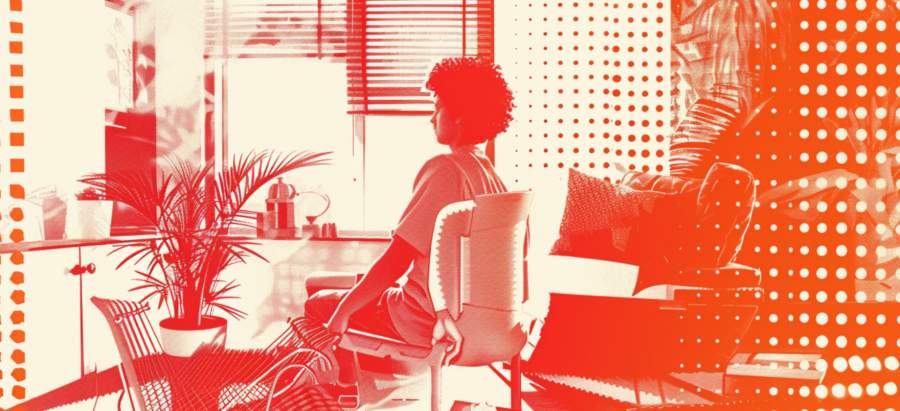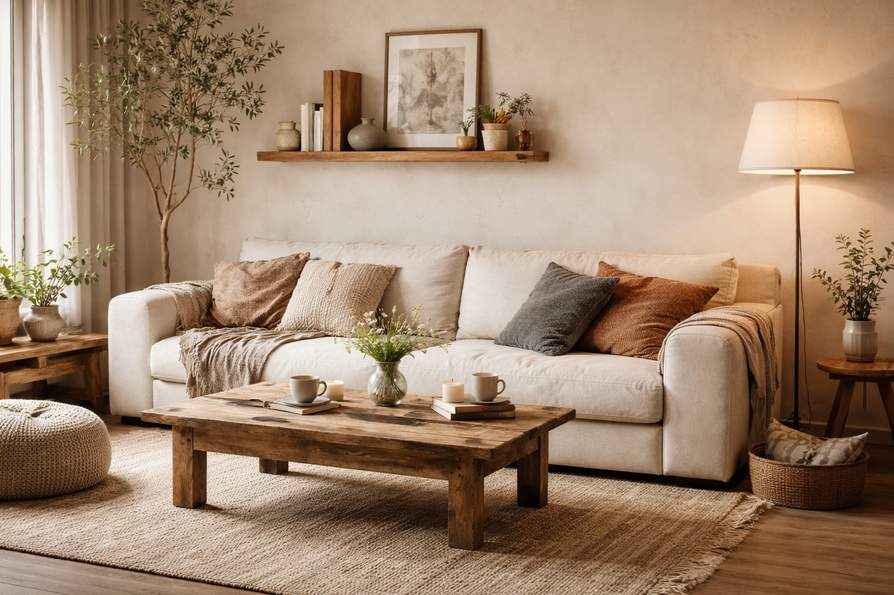
Almost minimalism steps in as the more relaxed sibling. It keeps the structure and simplicity, but loosens the collar a bit. Instead of striving for spotless perfection, it allows for a little visual noise—the kind that reminds you that a real person exists in the space, occasionally misplacing their keys and leaving a book open mid-thought.
Why Perfect Spaces Feel Slightly Unsettling
There’s a subtle psychological tension in overly pristine environments. When everything is aligned, spotless, and untouched, it signals control—sometimes too much of it. Human brains are wired to notice irregularities, but they’re also wired to feel at ease with signs of life. A space that looks untouched can feel like a museum exhibit where you’re not entirely sure if sitting down is allowed.Perfection creates distance. It suggests rules. It hints that any deviation—a stray cushion, a mug on the table—might disrupt the delicate balance. That low-level anxiety can make it harder to relax, even if the room is objectively beautiful.
Almost minimalism softens this edge. It introduces just enough imperfection to signal that the space is meant to be used, not preserved under invisible glass.
The Comfort of Controlled Clutter
Clutter has a bad reputation, mostly earned. But not all clutter is created equal. There’s a difference between chaos and intention. Controlled clutter is curated, even if it doesn’t look like it at first glance.Think of a stack of books on a side table—not perfectly aligned, but clearly chosen. Or a throw blanket that’s casually draped rather than folded with military precision. These elements add texture and narrative. They tell a quiet story about how the space is used.
A few ways this shows up in practice:
- Leaving one or two everyday items visible instead of hiding everything away
- Grouping objects loosely rather than arranging them with ruler-level accuracy
- Allowing surfaces to breathe without insisting they remain completely empty
Asymmetry as a Human Signature
Symmetry is pleasing, but too much of it can feel artificial. Nature rarely produces perfect balance, and neither do people. Introducing slight asymmetry—an off-center lamp, mismatched cushions, artwork that doesn’t line up with mathematical precision—creates a sense of authenticity.Asymmetry also guides the eye in a more natural way. Instead of locking everything into rigid order, it encourages movement and curiosity. The space feels less like a diagram and more like an experience.
Importantly, this doesn’t mean abandoning structure altogether. The goal isn’t randomness; it’s flexibility. A room can still feel cohesive while allowing for a few elements that break the pattern just enough to keep things interesting.
Letting Objects Earn Their Place
One of the quiet strengths of almost minimalism is that it values meaning over quantity. Every item doesn’t need to justify its existence with a deep backstory, but it should at least feel like it belongs.A slightly worn chair, a mug that’s not part of a matching set, a piece of art that makes you pause for a second longer than expected—these are the details that give a space its personality. They also prevent the environment from slipping into that showroom look where everything is technically perfect and emotionally absent.
There’s also a practical benefit. When objects are chosen for their relevance rather than their ability to match a theme, the space becomes easier to maintain. You’re less likely to feel the need to constantly edit, replace, or upgrade. The room settles into itself, and so do you.
Designing for Use, Not Display
A room that functions well tends to feel better than one that simply looks good from a doorway. Almost minimalism leans into this idea by prioritizing how a space is actually lived in. If a chair is always slightly angled because that’s where the light hits best in the afternoon, forcing it back into perfect alignment every day becomes a pointless ritual.Spaces that acknowledge real habits feel more intuitive. The coffee table might host a rotating cast of items—a book, a remote, perhaps a glass that was definitely meant to be taken back to the kitchen. These aren’t failures of design; they’re signs that the room is doing its job.
There’s also a quiet efficiency in this approach. When a space supports daily behavior instead of resisting it, it reduces friction. You stop adjusting yourself to fit the room and instead let the room accommodate you. It’s a small shift, but it changes how relaxed you feel without requiring a full redesign or a dramatic purge of belongings.
Balancing Calm with Character
The challenge is finding the line where simplicity meets personality without tipping into clutter. Too little, and the room feels sterile. Too much, and it feels overwhelming. Almost minimalism lives in that narrow, forgiving middle ground.A useful way to think about it is layering. Start with a clean foundation—neutral colors, functional furniture, open space. Then introduce elements that add warmth and individuality without crowding the scene.
- Add one unexpected object that draws attention without dominating
- Mix textures rather than adding more items—soft fabrics, natural materials, subtle contrasts
- Let a few items remain slightly out of place if they contribute to comfort
Messy in the Best Possible Way
Almost minimalism doesn’t celebrate chaos. It simply acknowledges that life has edges, and smoothing them all out removes something important. A perfectly staged room might impress for a moment, but a slightly imperfect one invites you to stay.There’s a quiet confidence in leaving things just a little undone. It suggests that the space isn’t performing for anyone—it’s simply being used. And in that subtle shift, rooms stop feeling like displays and start feeling like places where actual living happens, complete with all its small, endearing irregularities.
Article kindly provided by decorum-living.com