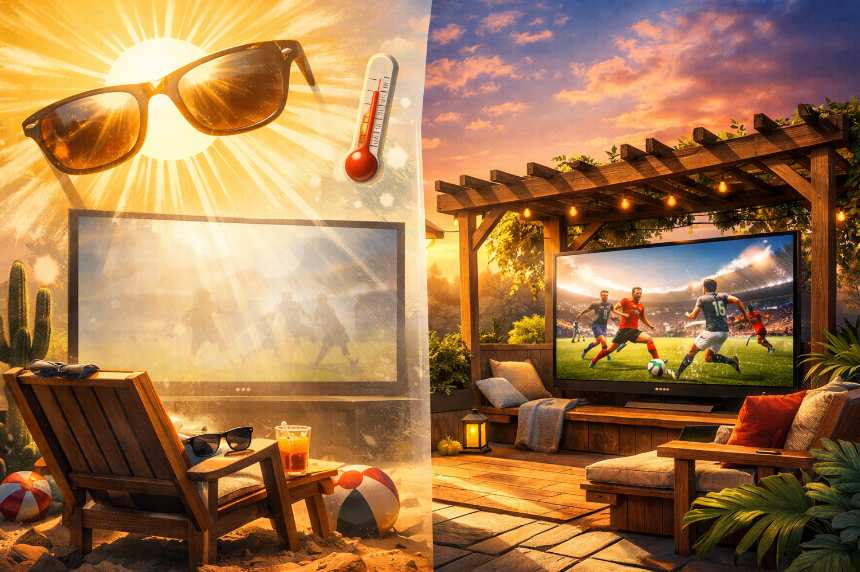
Not every outdoor viewing situation is the same. A shaded deck behaves differently than an open garden. Morning sun comes from one angle, late afternoon sun from another, and midday sun is the undisputed heavyweight champion of glare. Planning for brightness is not about buying the most expensive screen possible; it’s about understanding how light works in real spaces and using that knowledge wisely.
What Brightness Actually Means in Real Life
Brightness is measured in nits, which sounds like something you might brush off your jacket. In practical terms, nits describe how much light a screen can produce. Standard indoor TVs often sit around 300 to 500 nits. That’s fine for living rooms with curtains and lamps. Outdoors, those numbers can quickly feel underpowered.For partially shaded areas, screens in the 700 to 1,000 nit range usually perform comfortably. In spaces that receive direct sunlight for long stretches, 1,500 nits and above become far more effective. This doesn’t mean brighter is always better. Excessive brightness at night can feel harsh and reduce contrast. Balance matters, and it changes depending on when and where you watch.
Here is the serious part: brightness alone cannot compensate for poor placement. A high-nit screen pointed directly into the sun is still fighting a losing battle. Think of brightness as a helpful ally, not a miracle worker.
Glare Is the Real Villain
Glare does not politely announce itself. It sneaks in through reflections on the screen surface and turns dark scenes into mirrors. Anti-glare coatings and matte finishes help scatter reflected light instead of bouncing it straight back into your eyes. This is especially important near pools, glass railings, or light-colored walls that reflect sunlight like enthusiastic accomplices.Strategic positioning can dramatically reduce glare without spending extra money. Placing the screen perpendicular to the sun’s most intense angle often does more than adding raw brightness. Shade structures, umbrellas, or pergolas can also soften harsh light and make viewing comfortable without turning your patio into a bunker.
Planning for Different Times of Day
Morning coffee viewing and evening movie nights do not need the same setup. Consider how your outdoor space behaves across the day. Walk outside at different hours and note where shadows fall. This low-tech method is surprisingly effective.When planning your layout, keep these factors in mind:
- Direction of the strongest sunlight during peak hours
- Nearby reflective surfaces like windows and light stone
- Natural shade from trees or built structures
Brightness Versus Contrast and Why Both Matter
Brightness often steals the spotlight, but contrast quietly does much of the heavy lifting. Contrast is the difference between the darkest blacks and the brightest whites on the screen. Outdoors, low contrast can make images look flat and washed out, even if the screen is technically bright enough. This is why two TVs with the same nit rating can perform very differently under sunlight.High contrast keeps shadows detailed and highlights crisp, which is especially important for sports broadcasts and cinematic content with dark scenes. Without it, nighttime action movies turn into gray fog with occasional explosions of color. A balanced combination of strong brightness and solid contrast creates a picture that holds up under harsh conditions and still looks good after sunset.
Practical Setup Tips That Don’t Require a Toolbox
You don’t need an engineering degree to improve outdoor viewing quality. Small changes can produce noticeable results. Angle the screen slightly downward to reduce sky reflections. Use adjustable mounts to fine-tune positioning as seasons change. Even rearranging seating can help, especially when glare targets one specific spot like it has personal business there.If permanent shade structures aren’t an option, portable solutions work surprisingly well. Retractable awnings, outdoor curtains, and movable umbrellas offer flexibility without major renovations. These options also help regulate temperature, which keeps electronics happier and viewers less sweaty.
Cable management and weather protection also deserve attention. While brightness grabs headlines, moisture and heat quietly shorten device lifespan. Weather-rated enclosures and proper ventilation keep the setup functional long after the novelty wears off.
Choosing Brightness Without Overdoing It
It’s tempting to chase the highest number on the spec sheet. Resist that urge. Consider how often you actually watch in full daylight. If weekend afternoons are your main viewing window, higher brightness makes sense. If evenings dominate, mid-range brightness paired with good contrast is often the smarter choice.Energy use also rises with brightness. Ultra-bright screens draw more power and generate more heat. Moderation reduces operating costs and avoids turning your patio into a miniature solar experiment. Matching brightness to real-world habits is more practical than preparing for rare midday viewing marathons.
Bright Ideas Without the Sunburn
Outdoor TV brightness is not about winning a technical arms race. It’s about making outdoor spaces usable and enjoyable throughout the day. When brightness, placement, shade, and contrast work together, the result feels effortless. Afternoon matches remain watchable, evening movies stay comfortable on the eyes, and nobody has to sit at awkward angles just to catch the score.Good planning turns sunlight from an obstacle into a manageable factor. Instead of fighting nature, the setup adapts to it. That’s when outdoor viewing stops being a compromise and starts feeling like a genuine upgrade. The picture becomes clear, the seating feels intentional, and the only squinting left is from laughing at the commentary, not from trying to see the screen.
Article kindly provided by sarasontv.co.uk