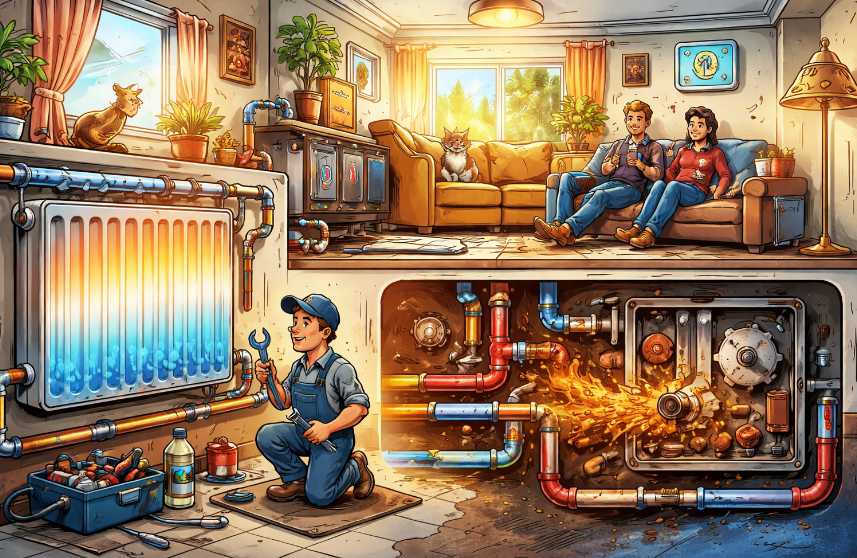
Why Radiators Heat Unevenly in the First Place
Radiators rely on hot water flowing smoothly through narrow internal channels. When everything is working well, heat spreads evenly across the surface. When it isn’t, the radiator becomes a patchwork of warm and cold zones.One of the most common culprits is trapped air. Air pockets sit at the top of radiators and block hot water from reaching certain sections. This is why cold spots often appear near the upper corners. Gravity keeps water low, air floats high, and the result is a radiator that looks warm on paper but feels half asleep in practice.
Another frequent cause is sludge buildup. Over time, tiny particles of rust, limescale, and debris collect inside the system. This thick mixture settles at the bottom of radiators and pipes, restricting water flow. Think of it as cholesterol for your heating system. The boiler works harder, circulation slows, and heat distribution becomes uneven.
How Furniture and Airflow Create Cold Zones
Not all cold spots come from inside the radiator. External airflow plays a role too. Large sofas pushed tight against radiators, heavy curtains draped over panels, and decorative covers that block vents all interfere with heat circulation.Radiators don’t just warm objects directly. They rely on convection: warm air rises, cool air sinks, and a gentle loop forms that distributes heat around the room. When airflow is blocked, warm air gets trapped behind obstacles, while the rest of the room stays cooler. The radiator may technically be hot, yet the space still feels underheated, which leads to higher thermostat settings and unnecessary energy use.
DIY Checks That Actually Make a Difference
Some fixes don’t require special tools or heroic levels of confidence. A few small actions can noticeably improve radiator performance.- Bleed radiators regularly to remove trapped air and restore full heat coverage.
- Check radiator valves to make sure they’re fully open and not partially stuck.
- Move large furniture slightly away from heat sources to improve airflow.
- Vacuum dust from radiator fins and surrounding areas to reduce insulation by grime.
When Sludge Turns Into a Serious Problem
Some cold spots refuse to respond to basic fixes. If the bottom of a radiator stays cold even after bleeding, sludge buildup is likely the main suspect. This is where professional solutions like powerflushing enter the scene. Instead of gently coaxing the system, powerflushing uses high-velocity water and cleaning chemicals to remove debris throughout the entire network of pipes and radiators.This process can restore circulation efficiency, improve heat output, and extend the life of boilers and pumps. It isn’t glamorous work, but neither is wearing three jumpers indoors while paying premium energy bills.
Even Heat Without Turning the Dial to Maximum
Balanced heating systems deliver comfort without aggressive thermostat settings. By ensuring radiators heat evenly, airflow remains unobstructed, and internal blockages are removed, rooms reach target temperatures faster and stay warm longer. That efficiency translates directly into energy savings and more consistent comfort across the home.Cold spots may seem minor, but they quietly influence how hard your entire system works. Fixing them is less about chasing perfection and more about restoring basic balance. When heat flows properly, the boiler relaxes, the radiators cooperate, and the household stops negotiating with blankets for survival.
Small Upgrades That Multiply Comfort
Once the obvious problems are solved, a few modest upgrades can quietly boost performance. Thermostatic radiator valves allow each room to regulate its own temperature. This prevents overheated spaces from stealing energy while colder rooms struggle to catch up. Reflective foil panels placed behind wall-mounted radiators reduce heat loss into external walls and push warmth back into the room. Pipe insulation in unheated spaces keeps hot water hotter for longer, meaning less wasted energy between the boiler and the radiator panel.These improvements don’t shout for attention. They simply do their job in the background, lowering running costs while improving comfort. Over a full heating season, the combined effect can be surprisingly noticeable on both energy bills and indoor temperature stability.
Why Ignoring Cold Spots Costs More Than You Think
Uneven heating creates a chain reaction. Rooms take longer to warm up. Thermostats stay set higher. Boilers cycle more frequently. Pumps work harder. Components wear faster. What starts as a cold corner eventually becomes a system-wide efficiency problem.There is also the comfort factor. Inconsistent room temperatures often lead to localized overheating. One area becomes tropical while another feels permanently underprepared for winter. This imbalance encourages unnecessary energy use because the thermostat measures average temperature, not individual discomfort zones. Correcting cold spots restores even heat distribution, allowing lower thermostat settings to feel warmer in practice.
From a technical perspective, balanced systems operate closer to their intended design. Heat exchangers transfer energy more efficiently, circulation improves, and return water temperatures stabilize. These details matter. They directly influence how much fuel is consumed to maintain a comfortable indoor environment.
Seasonal Maintenance Without the Drama
Routine heating checks don’t need to involve panic or emergency calls during the coldest week of the year. A simple seasonal routine keeps problems from accumulating.- Bleed radiators at the start of the heating season.
- Check visible pipe insulation for gaps or damage.
- Listen for unusual boiler noises that may indicate circulation issues.
- Schedule professional servicing to catch efficiency losses early.
Heating Things Up Without Burning Cash
Cold spots aren’t mysterious forces working against household happiness. They’re mechanical and environmental problems with practical solutions. Whether it’s releasing trapped air, clearing internal buildup, improving airflow, or upgrading controls, each adjustment brings the system closer to balanced performance.When radiators heat evenly, rooms warm faster, energy use drops, and comfort becomes predictable instead of negotiable. That’s the kind of improvement that pays for itself quietly, season after season, without demanding extra layers or dramatic thermostat adjustments.
Article kindly provided by limitlessheating.co.uk