This guide explores approachable wood-fire methods that feel adventurous without demanding wilderness survival skills. Expect a mix of practical advice, mild chaos management, and food that tastes like it earned its flavor the hard way.
Swedish Torch Cooking Without the Wilderness Beard
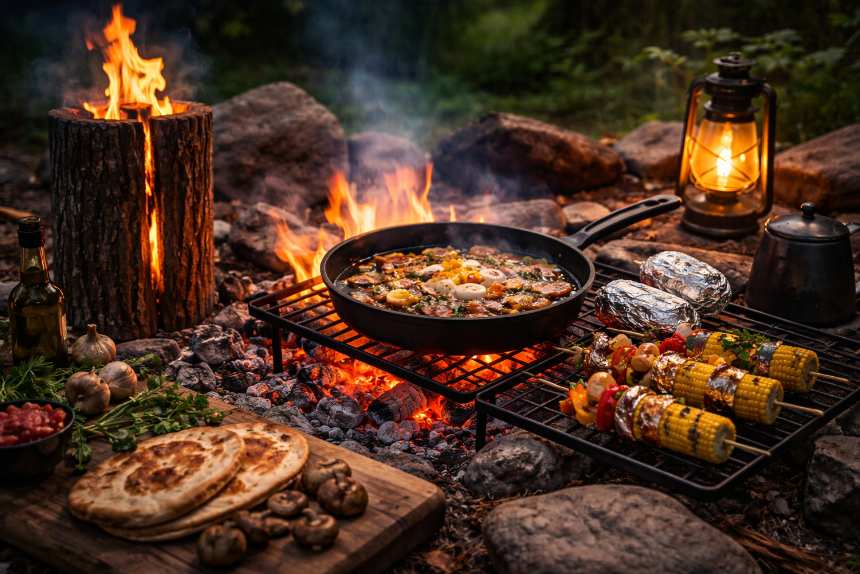
A Swedish torch is essentially a single upright log that’s been split partway down to create internal air channels. When lit from the top, it burns inward and upward, creating a steady flame that doubles as a natural stove. It looks theatrical, but it’s surprisingly functional.What makes this technique appealing is its efficiency. One log can support cooking for a decent stretch of time, especially for quick meals. A small pan placed over the top opening can handle eggs, sausages, or flatbreads. Kettles also sit happily on a torch, producing tea with an added note of triumph.
Serious tone moment: stability matters. Always place the torch on flat, non-flammable ground and keep it well away from structures or overhanging branches. Wind can shift flames unpredictably, so calm conditions are best. Keep water or a fire extinguisher nearby and never leave it unattended, no matter how hypnotic the flames become.
Simple recipe idea: crack two eggs into a lightly oiled pan, sprinkle salt, add chopped herbs, and cook directly above the torch opening. The gentle upward heat makes surprisingly tender eggs with faint smokiness.
Cooking Directly on Embers Like a Primitive Genius
Flames get all the attention, but embers are where serious cooking happens. After wood burns down, the glowing coals provide steady, even heat without flare-ups. This is ideal for foods that need patience rather than dramatic fireball energy.Potatoes wrapped in foil can be tucked beside embers and left to soften slowly. Corn on the cob benefits from being rotated gently over low embers, developing caramelized sweetness without charring into sadness. Flatbreads placed on a cast-iron surface above embers puff beautifully with minimal fuss.
Serious tone again: embers stay hot far longer than they look. Treat dull gray ash with respect. Use fire-safe tools, heat-resistant gloves, and maintain clear space around your cooking area. Burns happen quickly and do not improve the flavor profile.
Quick ember snack: wrap sliced apples with cinnamon and honey in foil, nestle near embers for 10–15 minutes, and enjoy a dessert that smells far more impressive than the effort required.
Gear That Helps Without Turning You Into a Pack Mule
Wood-fire cooking doesn’t require a shopping spree, but a few smart tools make life easier and safer.- Cast iron skillet for even heat and durability
- Long-handled tongs to avoid accidental eyebrow removal
- Heat-resistant gloves for repositioning cookware
- Metal grate for placing food above embers
Managing Fire Like a Calm Adult
Controlling heat is the difference between rustic cuisine and charcoal experiments. Instead of throwing food directly into roaring flames, think in zones. Build your fire so one side burns hotter while the other side holds gentler embers. This creates options. You can sear on the hot side and finish cooking on lower heat without panic flipping.Serious tone again: airflow matters. Fires need oxygen, but too much wind turns cooking into a stress test. Use natural windbreaks like rocks or fire-safe screens to keep flames steady. Never use treated wood, painted scraps, or mystery lumber. These release chemicals that belong nowhere near dinner.
When adding wood, place smaller pieces gradually instead of dumping a log pile like an action movie scene. Slow additions create consistent heat and better control. This also keeps neighbors from wondering whether emergency services are required.
Unexpected Recipes That Actually Work
Wood-fire cooking shines with simple ingredients that benefit from smoke and heat. Fancy plating is optional. Flavor is mandatory.- Fire-toasted flatbread topped with olive oil, garlic, and herbs
- Skewered vegetables brushed with butter and cooked over embers
- Bananas sliced lengthwise, filled with chocolate, wrapped in foil, and warmed near coals
For drinks, kettles over low flames can heat water for tea, coffee, or instant soups. Somehow everything tastes more satisfying when fire was involved, even if the ingredient list came from a backpack pocket.
Safety Rules That Prevent Legendary Mistakes
Cooking with fire deserves respect. Keep children and pets at a safe distance. Avoid loose clothing that might flirt with open flames. Tie back long hair unless dramatic singed bangs are part of the aesthetic.Have water, sand, or a fire extinguisher nearby at all times. When finished, fully extinguish embers by spreading them out and soaking with water. Stir until no heat remains. Walking away from glowing coals is not a bold move. It’s a bad idea wearing confidence.
Clean cookware after use. Soot buildup can affect flavor and turn your hands black for days. While this may look adventurous, it does complicate daily tasks like opening doors and shaking hands.
Grill of Fortune
Creative wood-fire cooking rewards patience, curiosity, and a willingness to accept mild unpredictability. Each fire behaves differently, each meal tells its own smoky story, and each successful dish feels oddly heroic. Whether using a Swedish torch, glowing embers, or a humble grate, the experience adds texture to cooking that indoor appliances simply can’t match. Keep safety first, embrace experimentation, and let the flames handle the rest without burning down the evening plans.Article kindly provided by glowing-embers.co.uk