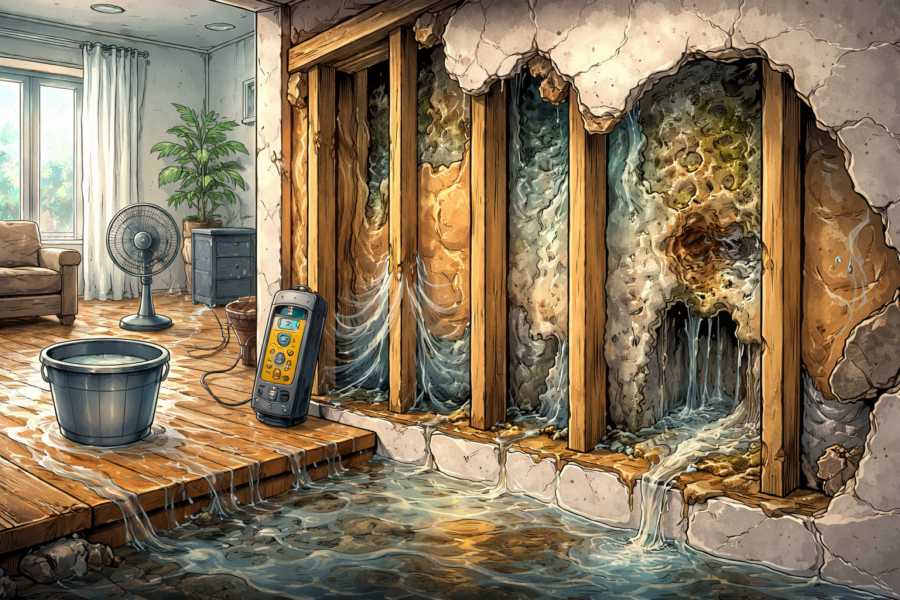
Dry Does Not Mean Dry
When a room looks dry, it usually means the surface water has evaporated. Inside wall cavities, however, moisture behaves differently. Porous materials absorb water like sponges and release it slowly. Warm indoor temperatures can even trap moisture by driving humid air deeper into walls instead of letting it escape.This hidden moisture creates several problems at once. Structural materials expand and contract, fasteners corrode, adhesives weaken, and mold spores find ideal growing conditions. That faint “basement smell” often signals that water is still hanging around in places nobody can see.
Drywall Under Pressure
Drywall is polite on the outside and dramatic on the inside. When wet, gypsum cores soften, lose strength, and sag between studs. Paper facing becomes a buffet for mold if moisture remains for more than a couple of days.Common warning signs include:
- Bubbling or peeling paint
- Soft or crumbly texture when gently pressed
- Staining that reappears after repainting
Insulation Acting Like a Moisture Sponge
Insulation plays an important role in temperature control, but it becomes problematic when soaked. Fiberglass batts trap water between fibers, slowing evaporation. Cellulose insulation absorbs even more moisture and can clump or compress, reducing its effectiveness.Wet insulation creates cold spots in winter and overheated areas in summer, forcing heating and cooling systems to work harder. It also keeps wall cavities damp for longer periods, creating perfect conditions for microbial growth. In many flood situations, saturated insulation must be removed and replaced to restore energy efficiency and indoor air quality.
Framing Materials and Silent Stress
Wood framing may look sturdy after a flood, but moisture can cause slow damage. Swelling, warping, and delayed cracking may appear weeks later as the wood dries unevenly. Metal framing components face corrosion risks that weaken structural connections.Practical drying steps for framing include improving air movement, maintaining consistent indoor temperatures, and monitoring moisture levels with meters instead of guessing. Fans aimed into wall openings and controlled ventilation reduce drying time and limit long-term stress on structural components.
Airflow Is the Unsung Hero
Proper airflow is one of the most effective tools during post-flood recovery. Stagnant air allows moisture to linger, while steady circulation encourages evaporation and prevents condensation buildup. Opening interior doors, using box fans to create cross-ventilation, and positioning dehumidifiers strategically can accelerate drying without turning the house into a wind tunnel.Stopping moisture from settling back into hidden spaces often requires patience, planning, and a willingness to move furniture, remove baseboards, and temporarily disrupt daily routines. These small inconveniences can prevent far bigger repairs later.
Dehumidifiers Doing Heavy Lifting
Dehumidifiers are not glamorous machines, but they quietly save homes every day. After flooding, indoor humidity often spikes well above comfortable levels. High moisture slows evaporation and allows condensation to form on cooler surfaces, sending water right back into walls and floors.For best results, keep windows closed when outdoor humidity is high, empty collection tanks frequently, and place units near the most affected rooms. Commercial-grade units remove more moisture per day, but even standard household models can make a noticeable difference when used consistently. Monitoring indoor humidity and aiming for levels below fifty percent helps keep materials drying in the right direction.
Ventilation Without Creating New Problems
Fresh air helps, but random ventilation can backfire. On humid days, opening windows may introduce more moisture than it removes. Controlled ventilation works best when paired with dehumidification and temperature control.Practical ventilation steps include:
- Using exhaust fans in kitchens and bathrooms
- Creating airflow paths with interior door positioning
- Directing fans toward damp structural areas rather than just open rooms
Moisture Meters and Reality Checks
Guesswork has a habit of being wrong at inconvenient times. Moisture meters provide clear feedback about drying progress inside walls and framing. Surface dryness does not guarantee internal dryness, and meters help confirm when materials have truly reached safe levels.Taking periodic readings allows homeowners to adjust airflow, dehumidifier placement, and ventilation strategies. It also helps determine whether additional material removal is necessary. Think of moisture meters as truth-tellers that prevent premature celebrations.
Preventing the Mold Comeback Tour
Mold growth often begins within two days of water exposure, and lingering moisture keeps the door open for repeat appearances. Cleaning affected surfaces with appropriate antimicrobial solutions, maintaining low humidity, and ensuring full drying are essential for long-term protection.Soft materials like carpets, padding, and upholstered furniture deserve special attention. If these items remain damp deep inside, odors and growth problems often follow. Removing and drying or replacing these materials can prevent ongoing indoor air quality issues.
When Professional Help Makes Sense
Some situations require more than household fans and patience. Large floods, sewage contamination, or structural saturation often demand professional drying equipment and expertise. Specialists use high-capacity dehumidifiers, air movers, and moisture mapping techniques to target hidden problem areas efficiently.Seeking help early can shorten drying timelines and reduce long-term repair costs. Waiting too long often turns manageable moisture problems into expensive reconstruction projects.
No More Damp Drama
Flood recovery does not end when puddles disappear. Hidden moisture continues working behind the scenes, quietly reshaping drywall, insulation, and framing if left unchecked. With consistent airflow, controlled humidity, careful monitoring, and timely material removal, homeowners can shut down moisture’s extended stay.A dry home is not just about comfort. It protects structural stability, preserves indoor air quality, and prevents future headaches that arrive long after the water truck has left the street. Keeping moisture under control ensures the only thing lingering after a flood is relief, not damp surprises hiding inside the walls.
Article kindly provided by waterdamagerestoration.boston